
School Waste Management
For every school, waste is not just a facilities issue. It sits inside compliance, site standards, budgets, and reputation. Schools are public sector spaces, but they are also busy educational institutions with kitchens, washrooms, classrooms, and deliveries all operating at once. That creates a practical need for a clear framework, not occasional clear-outs.
A strong partner helps staff understand what leaves the site, where value can be recovered, and how services should adapt across term time. Done properly, waste control supports cleaner operations, steadier decision-making, and a sustainable future without turning routine site management into something heavy or overly complicated.
Why Does Waste Management in Schools Matter?
School waste management matters because schools produce more than scattered rubbish from classrooms. It shapes how pupils understand responsibility, not just how sites operate. When systems are weak, materials mix, contamination rises, and more ends up in landfill. That is not only inefficient. It also increases pollution, affects hygiene, and creates avoidable health risks across shared spaces.
Stronger school waste management practices improve sorting, support waste reduction, and make operations easier to control. At the same time, they teach everyday habits. Pupils begin to see that environmental responsibility is practical, visible, and part of normal school life, not something separate or abstract.
Benefits of Effective School Waste Management
The benefits of effective waste management in education settings stretch further than many expect. Better systems support sustainability, create a greener environment, and make day-to-day operations more cost-effective. They also bring financial value through smarter collections, cleaner segregation, and stronger collaboration between site staff and specialist providers.
That matters. Less material is sent to landfill, useful resources are handled more carefully, and service planning becomes easier to manage over time. There is an educational gain as well. Pupils see behaviour in practice, not only in lessons, which helps build stronger habits and a consistent connection between action, responsibility, and routines.

Environmental Protection, Education & Habits
Environmental protection begins with ordinary routines. Schools can teach better habits by showing pupils how to sort materials, why resources matter, and where waste goes afterwards. That makes waste management education more credible, because it sits inside lived practice rather than posters alone. It also gives an educator a practical route into the school curriculum without forcing extra complexity onto lessons. When school children see consistent systems around them, the message lands more clearly. Over time, that helps shape the next generation. They learn that care, consistency, and environmental awareness belong in daily choices, not just annual campaigns about responsibility.
Healthier Environment
A healthier environment depends on what happens before waste leaves the gate. When bins overflow or the wrong materials sit together, smells spread, pests appear, and indoor comfort drops quickly. Faster handling of food residues, sanitary material, and general garbage helps protect hygiene in shared spaces. Better segregation also limits leakage, mess, and avoidable contact risks. Over time, that reduces the chance of wider pollution affecting outdoor areas. It matters especially where plastic pollution from loose litter can build around entrances or play spaces. Cleaner storage, steadier collections, and container placement make the site feel safer, easier to manage, and more settled daily.
Cost Savings and Efficiency
Cost savings and efficiency come from control, not from cutting corners. Schools that review bin use, pickup frequency, and waste composition usually spot where they can save money without weakening standards. General collections may be reduced while food or hygiene streams receive tighter attention. That balance improves route planning, limits removal, and reduces wasted transport miles. It can also lower the emission attached to avoidable journeys. In practice, this means services become sharper and budgets become easier to defend. For schools and local authorities, the real value lies in paying for the right level at the right time, nothing more.Cultivating Responsibility
Cultivating responsibility works best when a school asks people to do something clear, simple, and visible. Students’, learners’, and teachers’ behaviour all influences how well waste systems perform, so shared ownership matters. Sites that explain why materials must be separate usually get better participation than those relying on signage alone. This is also where schools can integrate practical expectations into routines, not just one-off campaigns. The strongest schemes feel normal. People understand what belongs where, and why. That creates better practices in their schools without turning waste into theatre. Responsibility becomes daily behaviour, supported by guidance rather than constant enforcement.
Different Types of Waste in Schools
Different types of waste appear across almost every part of a campus. Schools generate paper from classrooms, cardboard from deliveries, food waste from catering, plastics from drinks and packaging, and specialist materials from labs, offices, and washrooms. The profile can differ between primary schools and secondary schools, yet both need structured handling.
Across primary and secondary settings, waste paper still tends to be one of the most common streams. That matters because high-volume materials often shape service design, storage needs, and reporting priorities. Once a school identifies each stream properly, collections become easier to plan and recovery options become realistic and efficient overall.
- Paper and Cardboard – Paper and cardboard build up quickly through worksheets, deliveries, notices, and packaging, so consistent segregation helps schools recover fibre efficiently.
- Food waste – Food waste comes from leftovers, preparation, and spoilage, making fast collection essential if kitchens are to stay hygienic and controlled.
- Electronic Waste (E-waste) – Electronic Waste includes broken screens, cables, printers, and ageing devices, all needing specialist handling to protect data and recover materials.
- Hazardous/Chemical Waste – Hazardous and chemical waste from labs or maintenance areas needs secure storage, compliant collection, and careful documentation at every stage.
- Sanitary waste – Sanitary waste requires discreet, regular servicing to protect hygiene, support dignity, and keep washroom facilities safe for everyday school use.
- Plastic recycling – Plastic recycling works best when bottles, containers, and clean plastics are kept separate from food residues and mixed refuse streams.
- Single stream recycling – Single stream recycling can simplify participation, but schools still need clear signage and monitoring to prevent contamination from reducing value.
School Waste Collection Services
School waste collection services should follow the rhythm of the site, not interrupt it. The key is to dispose of materials through the right route, at the right time, with flexibility for term breaks and changing volumes.
When streams are sorted well, it becomes easier to split food waste from dry recycling and general refuse from specialist items. That protects recoverable material from contamination and supports stronger waste management and recycling performance without pushing schools into rigid, collection patterns that do not fit real school operations.
School Food Waste Management
School food waste management deserves close attention because it changes quickly, smells quickly, and affects hygiene quickly. The lesson is straightforward: if a school can divert just a tonne less through spoilage or leftovers, the effect compounds. Better handling may include compost or energy recovery routes that avoid landfilling. For schools aiming towards a zero waste mindset, food is often the most important starting point. It is where practical controls usually deliver the clearest gains.
Reducing food waste can be achieved through:
- Better meal planning and portion control
- Proper food storage and stock rotation
- Monitoring popular and unpopular meals
- Educating students about food waste
Recycling and Waste Disposal for Schools

Recycling and waste disposal for schools should be shaped around what materials can genuinely be recovered and what needs specialist treatment. Schools do not need grand claims here. They need clarity. A provider should aim to move clean streams into reuse or recycling, while ensuring harder materials are handled compliantly and safely.
That matters for control, but also for sustainable development goals linked to resource efficiency and responsible consumption. The process works best when schools understand which items are recyclable, which need secure containment, and which must be managed separately. Once that distinction is clear, compliance becomes steadier and standards improve noticeably.
Waste Containers and Bin Solutions for Schools
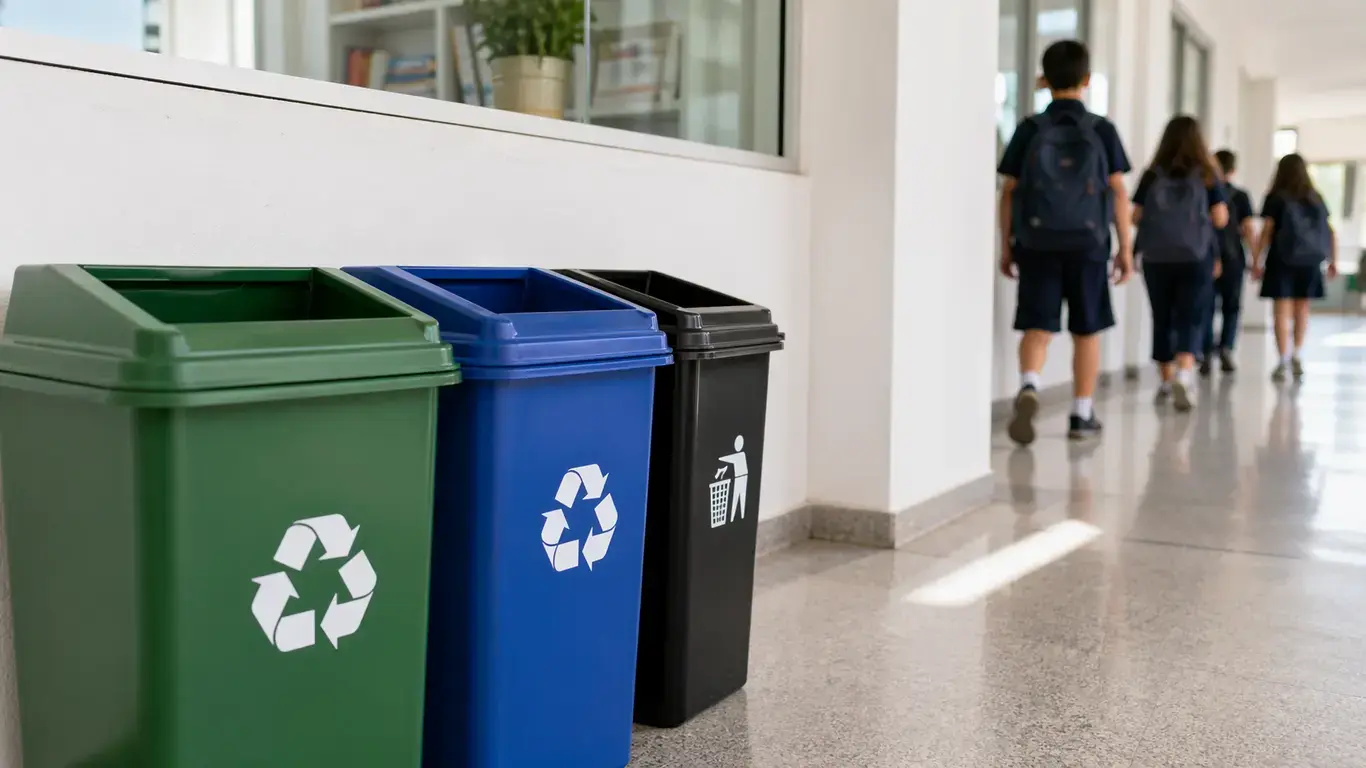
Waste containers and bin solutions for schools must suit volume, layout, and behaviour. Smaller internal bins can guide good habits where waste arises, while larger units support secure storage between collections.
In one case study approach, container choice starts with how people move across the site rather than with a catalogue. That thinking matters everywhere, whether a campus is in Britain or South Africa. The right bins should be visible and easy to use, so contamination falls and planning becomes more dependable.
bioCure - Your Trusted Partner for School Waste Management
bioCure is best understood as a waste management partner rather than a standard contractor. That difference is important for sustainable schools looking for expertise, not just pickups. The company’s speciality in liquid waste and organic waste allows it to support streams that many providers treat as awkward sidelines.
Where appropriate, those materials can be recovered for biofuel instead of being treated only as a burden. For a school that wants better control, bioCure offers a more informed route: tailored service design, compliance support, and advice grounded in site conditions. It is a measured, resource-aware model built for long-term operational confidence.
FAQs
What is the best way to manage waste in schools?
The best approach is a sustainable system built around clear segregation, labelled bins, staff ownership, and regular reviews. A school should know its main waste streams, set a realistic programme, and use collections that match actual volumes. Good routines make compliance easier and keep standards consistent across the whole site.
Can schools recycle all types of waste?
No. Schools can recycle many common materials, but not all waste belongs in the same stream. Some items need specialist handling, while others require secure disposal. Because sites create waste every year in different patterns, schools and local contractors should review streams regularly to keep recovery practical, lawful, and efficient.
What size dumpsters are suitable for schools?
Suitable dumpster sizes depend on pupil numbers, catering levels, available space, and collection frequency. Smaller bins may suit tighter sites, while larger units work better where volumes rise quickly. The right choice should support safe waste removal, straightforward access, and enough capacity without paying for oversized containers or unnecessary collections.
