
How Locker Room Smell Affects Work Culture
You probably know that smell all too well. It hits you before you’ve even really pushed the door open – that heavy, stale mix of sweat and stale air that’s just been hanging around for too long. For any business that’s got a gym, a changing area, or a locker room, that smell is a problem that goes way deeper than most managers think it does. It seeps into how staff feel about coming to work every day. How visitors perceive the company. And all those little decisions people make on a daily basis about whether they’re actually going to bother showing up to work at all.

What is Locker Room Smell?
It’s basically just a load of bacteria. They feed off sweat and body oils left on surfaces after people’ve used them and then churn out some seriously pungent compounds. And with all the moisture from showers and physical activity and hardly any air circulating, it all gets trapped. Skip a few cleaning sessions, and those compounds have soaked into the floors, walls, and fixtures – and then you’re no longer just dealing with a surface problem. You’re dealing with something that’s been embedded.
5 Main Causes of Locker Room Odours
Working out what’s causing the smell is key to actually fixing the problem. So here are the five most common culprits.
1. High Humidity and Poor Ventilation
All that steam from showers and people working out means there’s loads of moisture in the air. And if the room isn’t well ventilated, then that moisture just stays there and creates the perfect conditions for mould and mildew to take over. And then there’s the smell that comes out of it all – it’s dense and stale and pretty much exactly like the smell of dirty socks. Once that smell sets in, it’s not easy to shift it.
2. Accumulated Body Waste
Sweat and skin cells and body oils – all that stuff accumulates on surfaces all day long, and then bacteria and fungi start feeding off it and churning out even more pungent compounds. And the longer you leave cleaning, the worse it gets.
In a busy locker room, one bad clean is noticeable. But a few days later and the smell is getting into the materials. At that point, you’re not just doing a bit of maintenance, you’re doing some remedial work.
3. Unwashed Cleaning Equipment
Mops and cloths that aren’t properly cleaned and dried after use start growing bacteria of their own. Wiping the floor with a dirty mop doesn’t clean it; it just spreads the problem around. A disinfectant might help, but it’s not a substitute for actually sanitising the equipment after every use. Which is amazingly often not done.
4. Dry Floor Drains
Floor drains have water in them to stop sewer gases from getting into the room. But if the room sits empty for a while, that water dries up and the gas gets in. And the smell that comes out of it is unpleasant and gets blamed on the cleaners when really it’s just a plumbing issue. Flushing the drains every now and then is all you need to do to stop it from happening.
5. Neglected Cleaning Areas
Corners, under the benches, behind the lockers – all those nooks and crannies get missed during routine cleans and start to get damp and accumulate all sorts of gunk over time. Mould starts to grow, and before long, you’re dealing with a full-blown infestation. Make sure the area around the locker room is clear of clutter and that whoever is cleaning actually knows what they’re doing.
The Impact of Locker Room Odours on Workplace Culture
A stinky locker room says one thing to employees: that nobody cares about their comfort or well-being. That the space they spend most of their day in isn’t being taken care of. And that perception is one that gets built up quietly and goes all the way to the bottom line. Nobody usually says anything out loud, but it eats away at staff, and it doesn’t sort itself out.
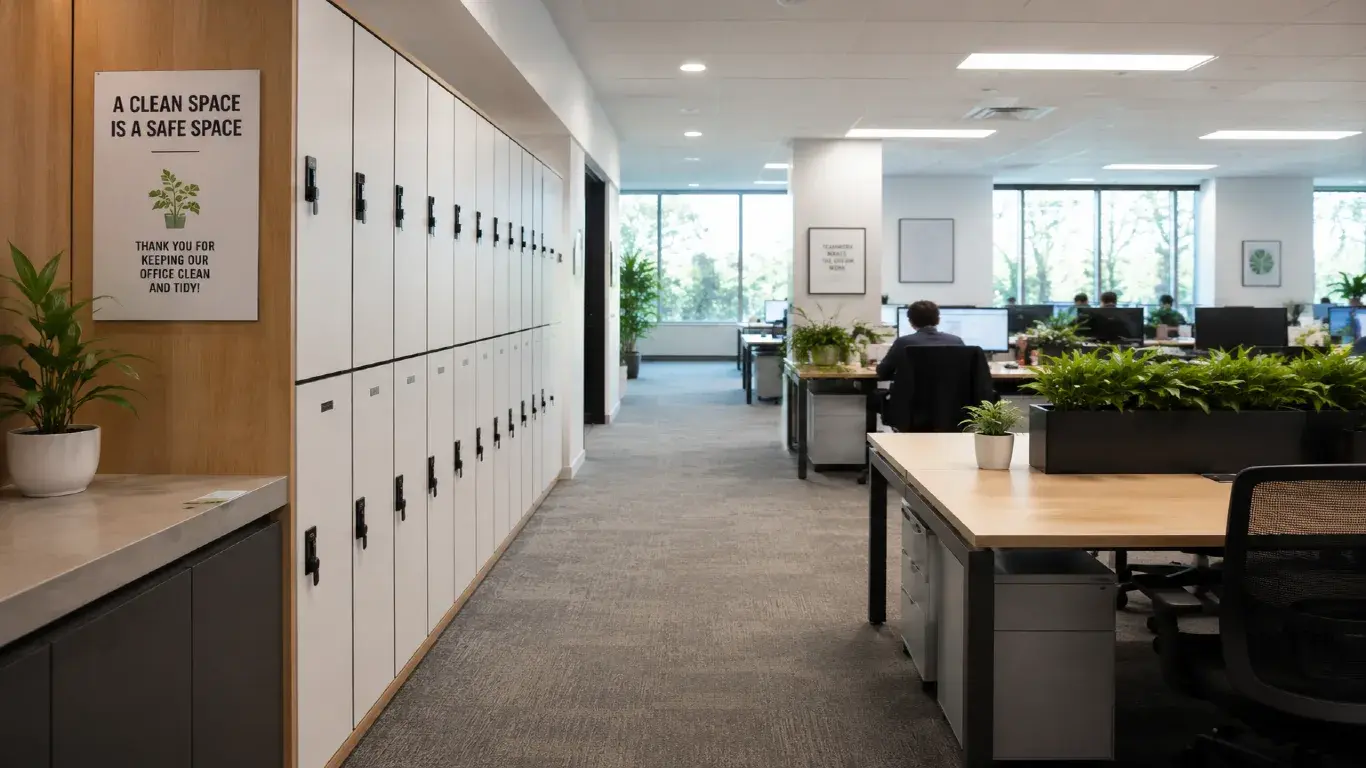
Positive Effects of a Clean, Fresh Locker Room
A well-maintained locker room is more than just a nice place to be. Here are the actual benefits of consistent upkeep.
Improved Health and Safety
Clean locker rooms have less bacteria hanging around. That means fewer skin infections, less respiratory irritation, and less chance of fungal infections spreading. All of which affects sick leave and workforce stability in the long run. It’s one of the clearest links between a maintenance decision and a health result, and it gets massively under-estimated.
Enhanced Reputation and Professionalism
Shared spaces form impressions the moment a client walks in or an employee starts their day, whether that’s a first day on the job, a routine visit from an inspector, or just another busy morning in a corporate office, industrial facility, or a school. Regardless, all of them are going to pass through or near a locker room at some point. A clean changing area sends a clear message that standards are taken seriously and applied uniformly across the board. On the other hand, a neglected one sends the opposite message. That impression tends to linger well after the visit has ended.
Equipment Longevity
Moisture and bacteria are major enemies of our infrastructure. Lockers , benches, flooring, and even drainage all suffer faster in a damp, poorly maintained environment. Regular cleaning and a bit of moisture management can slow that process down; less damage means fewer pricey replacements and lower maintenance costs over time. It’s a pretty simple argument on the financial side, separate from any comfort aspect.
Improved Air Quality
When you’ve got good ventilation and consistent cleaning, airborne compounds from sweat and bacteria get picked up before they have a chance to become a problem. Staff breathe better air before and after each shift. Over time, that contributes to better overall respiratory health across the team. People rarely give air quality in a locker room a second thought until it’s really, really bad, at which point the contrast between a stinky space and a clean one makes the difference very apparent, very quickly.
Negative Impacts of Locker Room Smell on Work Culture
Just because a locker room has a bad smell doesn’t mean it’s a background issue; it’s a real problem that creates a lot of extra issues beyond the changing room. That’s where the damage really starts to happen.
Declining Morale and Engagement
When a locker room smells bad day in and day out and nothing gets done to fix it, the staff starts to take notice. It rarely leads to one big confrontation – it’s more of a gradual disengagement. People start to care a little less, then more. By the time management is aware of the problem, morale has already taken a hit – and fixing the smell won’t fix the underlying issues on its own. That takes consistent effort and visible action over time.
Reduced Productivity and Increased Errors
Coming into or ending a shift in an environment with a bad smell is not a neutral experience. The discomfort causes low-level distraction. It may not be a clear conscious complaint, but it affects concentration and decision-making in small ways throughout the day. Over weeks and months, that distraction adds up. More errors, lower output, poorer quality work – it’s a pretty direct connection between working conditions and performance, and shared spaces are a big part of those conditions.
Increased Absenteeism and Turnover
Poorly maintained locker rooms expose staff to hygiene-related health risks. That directly increases sick leave. On top of that, employees who feel their facility isn’t being maintained to a reasonable standard are more likely to leave over time – not always immediately but steadily. The cost of replacing those people, covering recruitment, onboarding, and training, is a lot higher than the cost of regular locker room maintenance. That’s a comparison worth making – and it’s often overlooked.
Perception of Poor Hygiene
A lingering smell in one area can colour how people view the whole site. A boys locker room or any shared changing facility that routinely fails on basic smell creates an impression of poor hygiene standards across the board, regardless of how well-maintained everything else is. In regulated industries, auditors look at the entire facility. A neglected locker room puts the whole assessment at risk, not just one corner of it.
Practical Solutions to Eliminate Locker Room Smell
Odour control is most effective when several measures are applied consistently. Here are the things that make the most lasting difference.

Use neutralising devices
Odour-neutralising tools go after the actual compounds causing the smell, rather than just masking them. A spray system, some plug-in devices, or absorbent neutralising products placed around the room can all work, though results depend on space size and how bad the smell already is. These are standard parts of the maintenance routine – not one-off fixes. They prevent odour from returning when built into regular maintenance, but are just used to manage symptoms if used only after the smell has developed.
Proper ventilation systems
Ventilation is key to removing moisture and airborne compounds on an ongoing basis – not just during cleaning cycles. Extraction fans and mechanical circulation systems cut down on the conditions that allow odour to develop in the first place. An undersized system in a busy locker room won’t hold back moisture accumulation, no matter how well everything else is maintained.
Installation of air purification or odour control systems
Air purification goes beyond what ventilation can do on its own. These systems actively neutralise particles and compounds in the air (including those produced by bacteria and mould) rather than just moving air from one area to another.
In big facilities or places with a lot of foot traffic, the improvement to air quality is noticeable and sustained. Combined with regular cleaning, properly working drainage, and adequate ventilation, an odour control system provides one of the more complete and reliable long-term approaches to managing locker room smell – it addresses the source rather than just the symptoms.
FAQs
Why do locker rooms develop strong odours?
Bacteria love to snack on the organic waste that gets left behind on surfaces all day long and then release a pungent aroma that just hangs in the air when you’re stuck in an enclosed space with no good ventilation. Because of that, with no regular cleaning to speak of, the organic stuff just gets absorbed into the flooring, walls, and fixtures – it’s a perfect breeding ground. All those factors combined (the bacteria eating away, some moisture getting trapped, and not enough air getting in) is what makes that locker room smell just so darn hard to get rid of once it’s got a good hold.
Are locker room odours a health concern?
Yes, they can be a real problem. The bacteria, mould, and fungi that are causing the stench can cause all sorts of issues like skin infections, respiratory irritation, and fungal infections. And if you’ve got pre-existing allergies or breathing problems, being cooped up in a stuffy,, airless space isn’t good news. And beyond all that it can also affect how you feel overall in ways that might not be immediately obvious – the smell is just a symptom of something that needs a proper health response, not just a tidy up.
How often should locker rooms be cleaned?
If you’ve got a busy locker room, think about doing a daily wipe down, and at least once a week, do a good deep clean. And don’t forget to hit the high-touch areas like shower benches and handles with some disinfectant daily – it’s just common sense. And getting the drains flushed regularly will keep the water traps clear too. You need to be looking at the cleaning schedule and adjusting it to how much use the space gets, not just going by some set routine.
Who is responsible for maintaining locker room standards?
Employers have a legal obligation to provide a clean and safe working environment – and that includes the locker rooms. In sports or community facilities, it’s the management who’s responsible. At bioCURE, we work with orgs across South Africa to help them meet those standards and keep things up to scratch, with odour and waste management solutions that go way beyond what a regular cleaning contract is going to cover.

- Preparing Hotels and Guest Houses for the Holiday Season - October 20, 2026
- The Importance of Effective Waste Management in Retirement Homes and Villages - September 24, 2026
- How Municipalities Can Extend the Life of Existing Wastewater Infrastructure - September 15, 2026
