
The Importance of Effective Waste Management in Retirement Homes and Villages
Effective waste management in retirement homes starts with understanding how each part of the property operates. Accommodation creates everyday refuse, while kitchens and dining areas produce food scraps. Bathrooms bring personal-care requirements. Care areas may need separate arrangements, and shared facilities add further demands.
Across South Africa, retirement villages must coordinate these activities without disrupting daily life. When routines fall behind, overflowing bins can cause odours and attract pests. Hygiene concerns soon follow. Retirement facilities therefore need practical systems that suit their layout and the people using it, with clear responsibilities from the first bin through to removal from site.
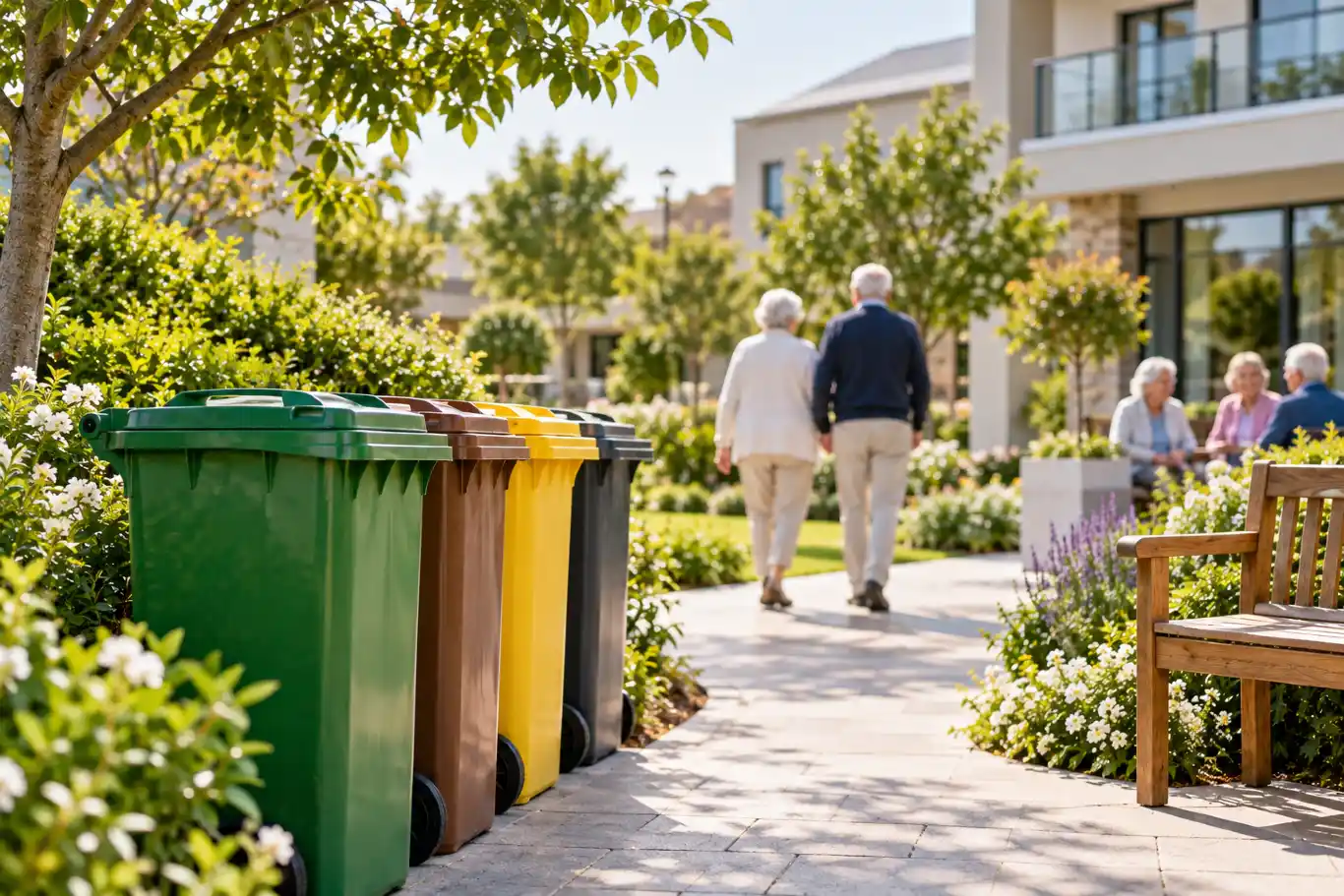
What Is Waste Management in Retirement Homes and Villages?
Retirement home waste management covers collecting unwanted materials, separating them correctly and placing them in suitable containers before secure storage and removal. It connects everyday routines inside buildings with the contractors taking material off site. Requirements vary between independent living, assisted living and frail care. An apartment block may mainly need household refuse arrangements, while residential care can involve additional personal-care materials or treatment residues.
Clear waste handling procedures explain who empties containers and where each load goes next. Waste must remain appropriately contained throughout that journey, with arrangements adapted whenever services, resident needs or the building layout change significantly.
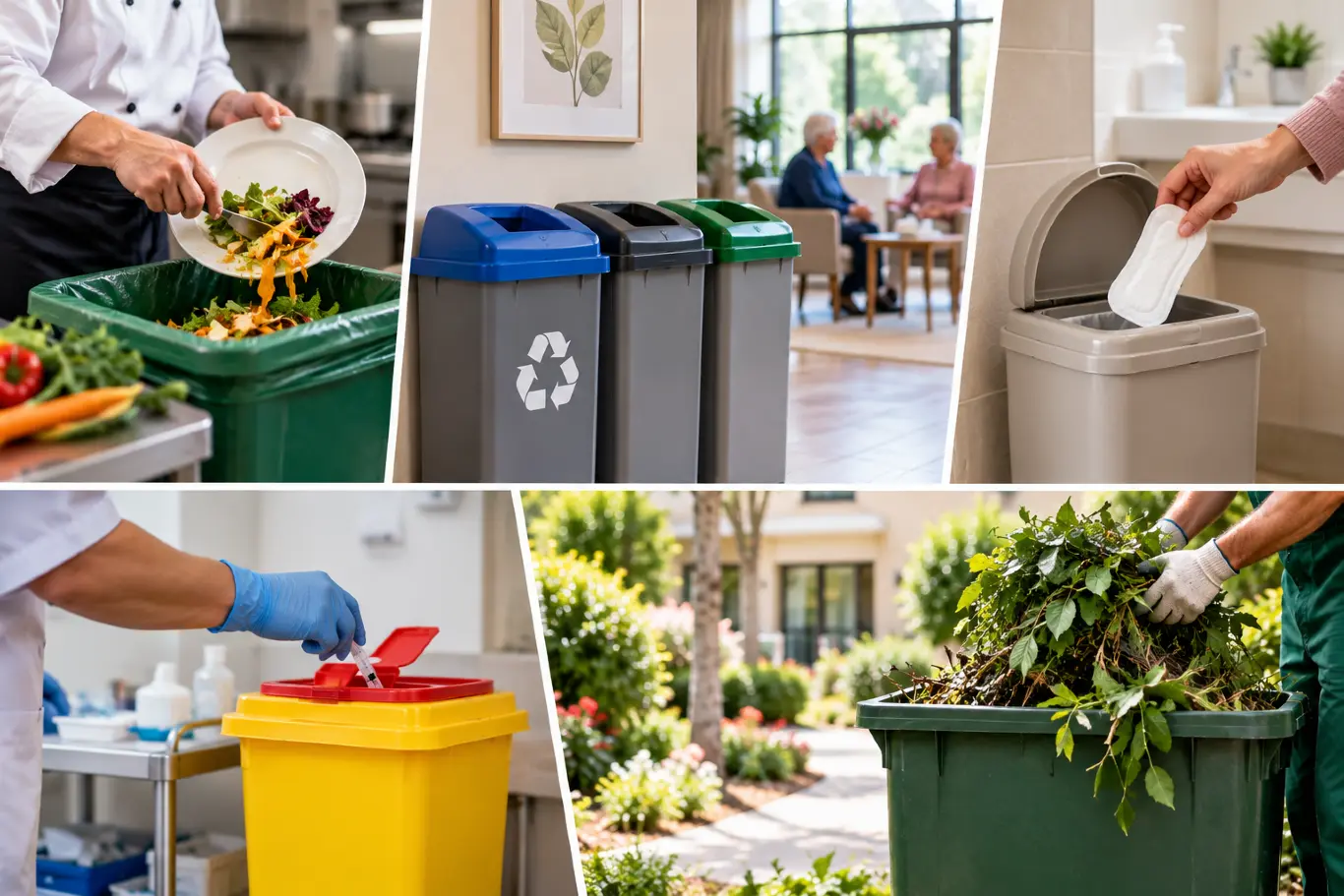
What Types of Waste Do Retirement Facilities Need to Manage?
Different types of waste need different containers, handling precautions and collection arrangements. The waste produced in a dining room presents different concerns from material leaving a treatment area. Identifying these waste streams helps teams choose suitable routes without mixing incompatible materials. Accurate waste classification matters because the waste type determines what happens after it leaves the resident or working area.
Food and Organic Waste
Meal preparation creates peelings and trimmings before food reaches the table. Dining facilities add uneaten portions, while residues remain on preparation surfaces and inside containers. Practical food waste management starts with keeping these materials contained and moving them out of working areas promptly. Wet scraps can leak through unsuitable bags. Storage arrangements should therefore account for moisture and the time between collections, particularly where kitchens serve the same village or meals continue throughout the day.
General and Recyclable Waste
Paper from offices and cardboard from deliveries can often be recovered alongside accepted plastics, packaging and bottles. Routine residential refuse needs its own route. Keep recyclable materials separate from contaminated items and general waste, following the receiving contractor’s acceptance rules. Effective waste segregation depends on knowing what can actually be recycled locally. A mixed bag of clean packaging and food-soiled material can undermine the arrangement, even when everyone intended to support waste and recycling efforts.
Sanitary and Personal-Care Waste
Bathrooms and personal-care routines generate used sanitary products, with higher-care areas often producing larger quantities. Suitable containment and regular removal help maintain privacy and prevent leakage. Sanitary waste management should reflect the assessed risks within these care settings. Sanitary and personal-care waste should be handled according to applicable South African, provincial and municipal requirements, particularly where frail-care or nursing services are provided. Staff need clear instructions for bagging and moving used products, especially when a resident’s condition changes or contamination raises handling concerns.
Healthcare-Related Waste Where Applicable
Facilities offering frail care, nursing or sickbay services may generate health care risk waste (HCRW). Examples can include dressings contaminated with blood and used personal protective equipment (PPE), depending on contamination and assessment. Used needles require suitable sharps waste containers, while pharmaceutical waste needs a specialist route.
Healthcare waste management arrangements should match the activities performed. Independent accommodation does not automatically need these systems, and treatment-related materials should never be assumed suitable for ordinary bins.
Garden and Maintenance Waste
Grass cuttings and prunings accumulate during landscaping, particularly after seasonal work. Routine maintenance adds different materials, such as broken fittings or leftover paint. These should not automatically share a collection route. Paint residues and solvents need assessment against applicable hazardous waste regulations, while green material may have a separate recovery option. Proper management includes checking contractor acceptance before work begins, so disposal of waste from a maintenance project does not become an unexpected storage problem.
Why Effective Waste Management Matters in Retirement Facilities
Reliable daily routines make a noticeable difference to comfort and working conditions. Residents and staff spend less time dealing with unpleasant smells, and managers face fewer urgent interruptions. Effective care home waste management also helps keep shared spaces usable without bins or collection trolleys becoming obstacles. For care facilities, consistency supports dignity as well as cleanliness.
Families can visit without encountering neglected service areas or repeated complaints about bathrooms. Across the care sector, sensible waste management practices protect time and resources while supporting a cleaner property. The benefits reach beyond the refuse room into everyday meals, personal care and maintenance.
Resident Health and Wellbeing
Older people, especially those who are frail, may be more vulnerable to the consequences of contact with contaminated materials. Keeping refuse contained helps reduce health risks and supports a safe environment around living areas. Careful routines contribute to public health by limiting opportunities for the spread of disease. They also protect human health during cleaning. Smell alone does not establish a risk of infection; cleanliness and appropriate precautions still matter when no odour is noticeable.
Pest Prevention
Exposed scraps give insects and other pests a food source. Liquids leaking from bags can leave attractive residues beneath containers, while accumulated debris provides shelter nearby. Keeping these areas clean and enclosed helps reduce pest pressure around buildings. The benefit extends to kitchens and dining rooms, where pest activity can interrupt service and unsettle residents. Refuse controls should work alongside the site’s pest-monitoring arrangements, with sightings investigated before a small problem spreads to adjoining areas.
Clean and Comfortable Communal Areas
Dining rooms feel more welcoming when cleared tables are not accompanied by full bins nearby. Corridors need clear passage, particularly for people using mobility aids. Bathrooms and lounges also benefit when used materials are removed discreetly and promptly. These details support health and social wellbeing by making shared spaces easier to use. Staff and residents can carry on with activities without navigating collection bags or avoiding rooms because a lingering smell has made them uncomfortable.
Operational Efficiency
Predictable collection of waste gives cleaning teams a workable routine and managers fewer interruptions. Bins remain usable between visits, reducing emergency call-outs and the time spent rearranging storage. Repeated complaints should also become less common when recurring causes are addressed. Care providers can then allocate staff time more confidently, rather than pulling people away from duties to deal with overflow. Better coordination is particularly useful when kitchen services and cleaning shifts overlap during busy periods.
Environmental Responsibility
Separating accepted recyclables keeps useful material available for recovery and reduces avoidable contamination. It also makes collection arrangements easier to understand. Protecting the surroundings starts with practical choices, such as keeping liquids out of unsuitable containers and preventing litter from escaping storage areas. These measures support everyday site standards without demanding elaborate programmes. Start with the materials the facility can separate reliably, then check whether the intended recovery route is available and working as expected.
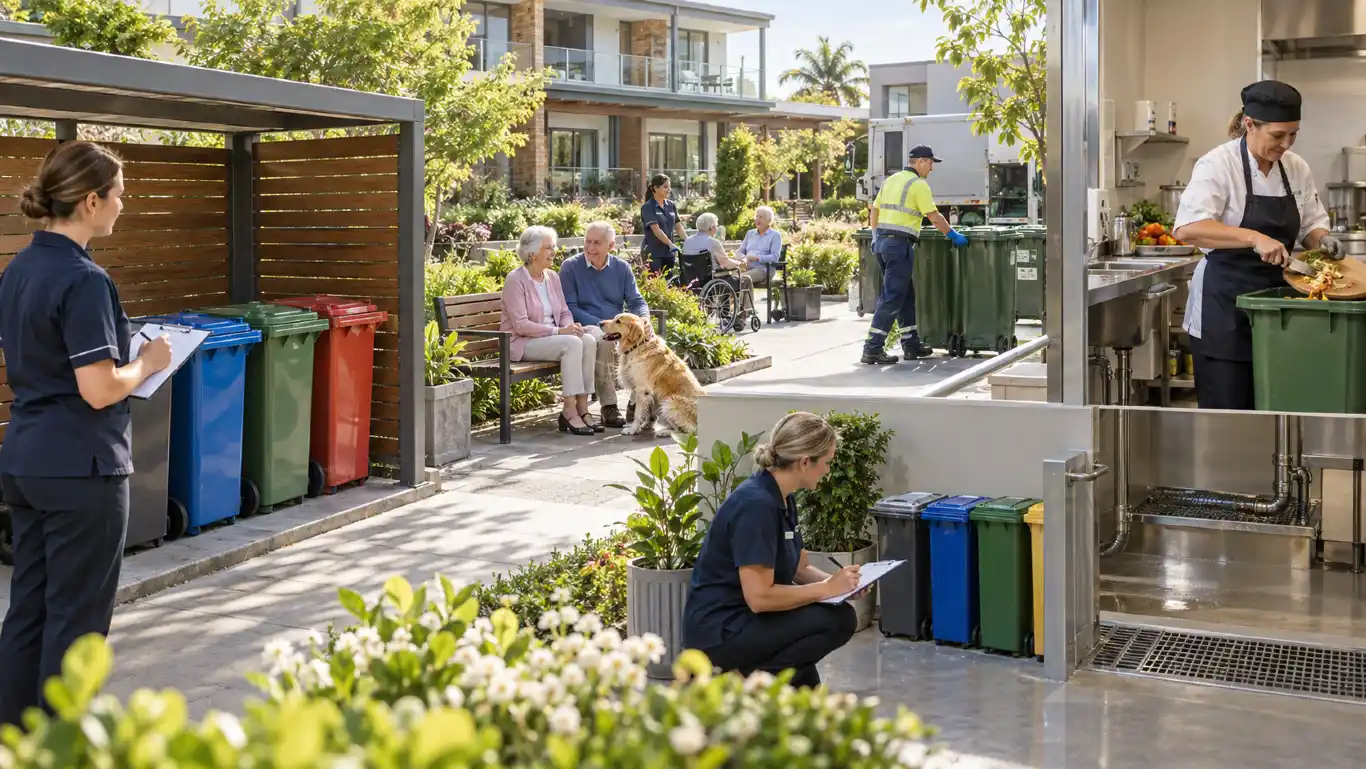
6 Ways Retirement Homes and Villages Can Improve Waste Management
1. Conduct a Site-Wide Waste Assessment
Start by identifying where waste originates across kitchens, care areas and the wider property. Check busy locations for high volumes and recurring odours or overflow, then compare available storage capacity with existing collection schedules. Where medical waste is generated, assess arrangements for specialist health care risk waste (HCRW) services separately. Finding the actual source prevents unsuitable recommendations. This reflects bioCURE’s Customise, Cure, Clean and Certify approach, with inspection guiding relevant treatments for the conditions found at each facility.
2. Separate Waste Where It Is Generated
Make separation part of the task that creates the material. Resident areas need accessible arrangements, while kitchens should capture scraps before washing up. Dining rooms need a clear route for cleared plates and packaging. Bathrooms require suitable personal-care containers. Offices can separate paper at desks, and maintenance areas should keep project residues apart. In care areas, follow the clinical procedures. Moving everything into one bag first makes later sorting harder and can expose workers unnecessarily.
3. Position and Identify Waste Containers Clearly
Use clearly labelled containers that suit their contents and stand close enough to the activity they support. Residents need arrangements they can understand and reach; carers and cleaners need space to work safely. Show kitchen staff and maintenance teams where to dispose of their materials, including items that need separate handling. Secure waste storage areas should accommodate movement without obstructing access. Check lid operation and container condition regularly, particularly where bags are lifted or transferred.
4. Manage Food Waste, Grease and Kitchen Waste Carefully
Scrape food residues into suitable containers before washing dishes, and keep organic material covered in bin storage. Match removal visits to meal activity so wet scraps cannot linger. Kitchen drains need attention too: fats, oils and grease can accumulate in grease traps. Planned grease trap cleaning forms part of liquid waste management. When smells persist after refuse leaves, investigate the trap and connected drainage before assuming the bins need emptying again or stronger cleaning products.
5. Match Waste Collection Frequency to Facility Demand
Set waste collection frequency around occupancy and meal volumes, allowing for seasonal occupancy changes. Consider the material being held and how much storage remains available. Hot weather can intensify smells, while events may create unusual short-term volumes. Too few visits encourage overflow and leave residues on site longer. Unnecessary visits can increase costs. Review the collection timetable against what actually accumulates, with a clear contingency for missed collections and periods when demand rises beyond expectations.
6. Monitor Waste Volumes, Odours and Recurring Problem Areas
Keep a record of quantities removed and how often collections occur. Log overflow separately, alongside contamination or rejected loads. Record complaints with their location and time, then compare them with cleaning and maintenance activity. Repeated smells around kitchens or drains may indicate a wider grease-trap, drainage or liquid-waste problem. Tracking patterns helps managers decide what needs investigation and whether work has helped. A completed visit alone does not demonstrate that the underlying cause has disappeared.
Waste Management Responsibilities for Retirement Facilities in South Africa
Requirements depend on the municipality and local by-laws, the materials handled and facility activities, including nursing or frail care. Appropriate separation and secure storage support compliant waste management. Arrange suitable collection and treatment routes, keeping service records and relevant certificates. Health care risk waste needs separate handling from ordinary refuse.
Waste management requirements vary according to applicable national, provincial and municipal requirements. Retirement facility waste disposal arrangements should reflect this local framework.

Common Waste Management Problems in Retirement Villages
Problems often become visible in one place even when their source lies elsewhere. A smell beside a dining room may originate in nearby drainage, while an overflowing container can reflect storage constraints or a collection mismatch. Waste in care homes also changes as occupancy and support needs increase. Existing arrangements may struggle gradually, making deterioration easy to overlook.
Complaints that return after cleaning deserve particular attention because they suggest the immediate symptom has been addressed without resolving the cause. The following problems can appear separately or together, affecting daily routines and making otherwise well-kept surroundings feel neglected to regular users.
Persistent Waste and Bathroom Odours
Smells that return soon after cleaning can linger around waste areas and bathroom fittings. Bin lids may hold residue, while drainage beneath sinks or floor outlets can produce an odour even when surfaces look clean. The pattern may be stronger after busy periods or remain constant overnight. Residents sometimes notice it in nearby rooms before anyone identifies the source. A recurring complaint across several locations can indicate a connected problem rather than separate housekeeping lapses.
Overflowing or Poorly Located Waste Storage Areas
Bags stacked beside full containers suggest the available space is no longer coping with demand. Unsuitable placement can make matters worse when doors restrict movement or bins stand close to occupied rooms. Leaks leave wet patches and residues around the holding area. Collection vehicles may struggle to reach awkward locations, allowing material to accumulate further. These problems often appear together, with restricted access making an already crowded area harder to empty and clean between visits.
Food Waste and Kitchen Residue
Scraps left beneath preparation equipment or inside poorly emptied containers can remain after the kitchen clean. Damp organic material starts to smell, and small deposits can attract insects even when bins look tidy. Uneaten meals add to the load when clearing routines fall behind. Sticky surfaces or liquid trails near storage areas may accompany the odour. The problem can become more noticeable during warm weather or when consecutive meal services leave little time for clearing.
Grease and Fat Trap Problems
An unpleasant smell near the kitchen can accompany grease build-up inside a trap or connected pipework. Water may drain slowly, and staff might notice a sink backing up repeatedly after washing up. These symptoms can persist despite clean floors and empty bins. Fat trap servicing that has fallen behind may be one contributor, although pipe defects or other blockages can also be involved. Recurring drainage trouble can interrupt preparation and leave wet areas around kitchen equipment.
Irregular Collection Schedules
Containers may fill well before the next visit when the timetable no longer reflects activity on site. Elsewhere, bins might remain empty when a vehicle arrives. Missed collections can make a mismatch more obvious, especially over weekends or after events. Residents then encounter bags waiting outside designated containers and smells that intensify before removal. The pattern often repeats on particular days, showing that the difficulty follows the service timetable rather than an isolated busy shift.
Waste Problems Around Higher-Care Areas
Frail-care and nursing areas can generate materials needing different containment from residential refuse. Gaps in care waste management may show up as leaking bags or unsuitable containers beside treatment areas. Care workers can face uncertainty when instructions do not distinguish infectious waste from other used materials. Some items resemble hospital waste because similar procedures produce them. Problems arise when containment and handling arrangements fail to reflect those procedures, especially after nursing services have been introduced.
When Does a Retirement Facility Need Professional Waste Management Support?
Professional assessment becomes useful when the same complaints return despite routine cleaning and scheduled removals. Persistent smells may accompany overflowing bins or food residues that remain difficult to contain. Slow drains and recurring fat-trap trouble suggest another area to investigate. Liquid leaks also need attention, particularly where their source is unclear.
For nursing home waste management, the appropriate specialist depends on the material and the problem involved. A facility may need drainage expertise alongside its existing refuse contractor. Where the concern centres on stubborn odours or kitchen effluent, bioCURE can assess relevant conditions and recommend targeted support for the site.
How bioCURE Supports Retirement Homes and Retirement Villages
bioCURE works with facilities facing persistent smells, problematic kitchen effluent and cleaning challenges that need specialist attention. Its role centres on identifying causes and applying suitable treatment within an agreed service scope. That can support daily operations where repeated cleaning has not resolved an underlying issue. Existing refuse collections and specialist clinical arrangements still need their own appropriate providers.
The emphasis is practical: understand the site, address the source and plan maintenance around actual conditions. For retirement properties, bioCURE offers site-specific assessment, targeted odour treatment, support for liquid-waste systems, specialised cleaning for relevant spillages and customised treatment and maintenance planning.
Site-Specific Assessment
bioCURE begins by investigating where the problem originates and how the affected area operates. A complaint near a bin may lead to checks of surrounding surfaces or connected drains before treatment is proposed. Site conditions guide the recommendation, including access and the way the space is used. This helps distinguish a cleaning requirement from a recurring system issue. The resulting scope can then address the identified source with a solution appropriate to that retirement property.
Odour Control
Persistent smells around waste areas or washrooms need an approach suited to their source. bioCURE assesses the relevant conditions and recommends treatments for affected spaces, including kitchens and drains where organic residues may contribute. The aim is to address the cause behind recurring smells and improve comfort around occupied areas. Treatment should sit alongside cleaning and maintenance routines, with attention to how residents use the surrounding rooms and whether the same complaint returns after service.
Liquid Waste Management
Commercial kitchens place regular demands on grease traps and connected drainage. bioCURE provides servicing that can include pump-outs, trap cleaning and drain maintenance, with treatment selected for the conditions found. Appropriate documentation supports the management and disposal of collected material. The work should account for meal preparation times and access to affected equipment. Planned attention helps limit accumulated grease and recurring blockages, while the facility retains a clearer record of work completed on these systems.
Specialised Cleaning and Waste Spillages
A leaking container or overflowing fat trap can leave residues that routine mopping cannot adequately remove. bioCURE provides specialised cleaning for relevant waste-related spillages and service areas, with the response matched to the material involved. The priority is containing contamination and restricting access where necessary. Suitably equipped personnel can then remove residues and clean affected surfaces. The scope should be confirmed before work begins, particularly when the source or contents of a spillage are uncertain.
Customised Treatment and Maintenance Planning
A treatment plan should reflect the condition of the installation and how heavily the facility uses it. bioCURE tailors its approach to the site rather than applying the same package everywhere. Maintenance timing can account for kitchen activity and previous trouble spots, with findings used to review the agreed work. This gives managers a practical basis for follow-up and helps identify when changing conditions call for adjustments to the treatment or the frequency of visits.
FAQs
What types of waste do retirement homes and villages generate?
Most properties generate everyday refuse and recyclable packaging alongside food scraps, sanitary materials and garden cuttings. Maintenance adds further residues. Some facilities also produce clinical waste through nursing or sickbay services. The mix depends on the activities provided, so each property needs arrangements suited to its actual operations and residents.
How can retirement villages prevent odours from waste storage areas?
Keep materials appropriately contained, arrange regular removal and clean bins after emptying. Pay particular attention to food residues and liquid trapped beneath containers. If smells continue despite these measures, investigate nearby drains and grease traps. Finding the source allows teams to manage waste safely without relying on repeated surface cleaning.
Do retirement facilities need different waste systems for frail-care areas?
Sometimes. Waste management in nursing homes should reflect the procedures performed and the assessed risks. Frail-care areas may produce used dressings or needles needing separate containment and specialist handling. Other materials can follow ordinary routes where appropriate. Staff should follow local requirements and the facility’s clinical procedures for each material.

- Preparing Hotels and Guest Houses for the Holiday Season - October 20, 2026
- The Importance of Effective Waste Management in Retirement Homes and Villages - September 24, 2026
- How Municipalities Can Extend the Life of Existing Wastewater Infrastructure - September 15, 2026
