
Nobody particularly wants to talk about washroom hygiene. It’s not the sort of thing that comes up at dinner. But if you manage a building, run a business, or oversee any kind of public space, it’s one of those topics you can’t really avoid. Because when washroom standards drop, the consequences go well beyond a bit of unpleasantness. This is where public washroom hygiene challenges start to become impossible to ignore.
We’re talking about germ transmission that makes people properly ill. We’re talking about liability, about reputation, about visitors who never come back. And in our experience working with facilities across SA and beyond, the organisations that take washroom hygiene seriously tend to be the ones that avoid the worst of those consequences. This guide covers what goes wrong, what’s at stake, and what you can realistically do about it.
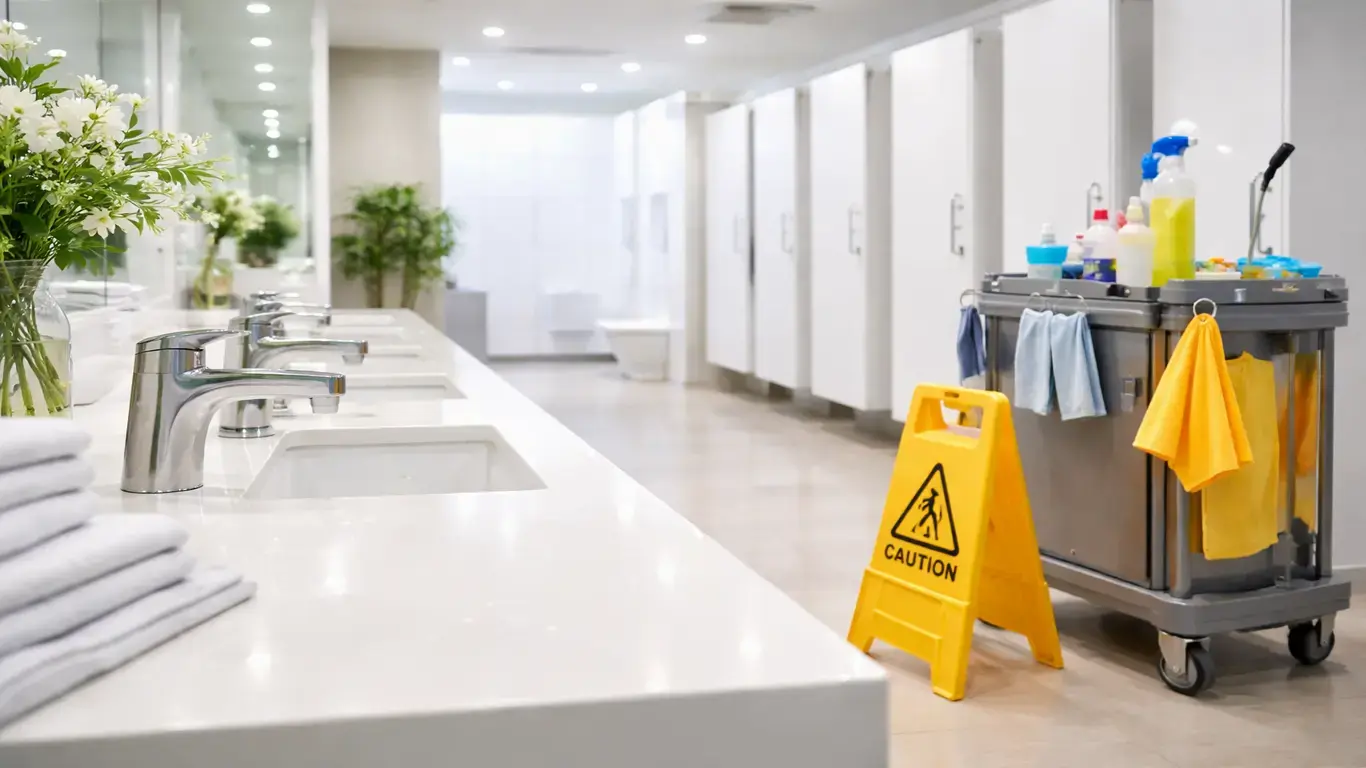
Here’s a number that surprises most people. E. coli—the strain responsible for serious gut infections—can survive on a stainless steel surface for up to sixteen weeks. Not days. Weeks. Norovirus persists on hard surfaces for days at a stretch, and influenza sticks around in cold, damp environments (which, let’s be honest, describes the average SA washroom for most of the year).
So when we talk about washroom hygiene, what we’re really talking about is controlling pathogens. Every tap handle, every lock, every door handle is a collection point. Flushing aerosolises particles that drift onto surrounding fixtures. And anyone who leaves without properly washing their hands carries those organisms out into the world with them.
Proper sanitation does the obvious thing: it protects health. But it also preserves dignity. Nobody should have to hover over a toilet because the seat hasn’t been wiped, or dry their hands on their clothes because the dispenser ran out hours ago. And there’s a reputational layer to all of this that businesses consistently underestimate. A clean washroom environment signals care. A neglected one signals the opposite. People pick up on it faster than you’d think.
Key reasons for maintaining high standards in public washrooms include:
Think about a single door handle in a busy office building. By 10 a.m., maybe fifty people have grabbed it. Each of those people also touched their phone, their keyboard, their face. The germ load on that one handle builds and builds. Toilet seats, flush buttons, tap handles, they all accumulate organisms the same way. Consistent toilet cleaning and focused disinfection of high-touch surfaces are really the only reliable approach to limiting transmission among users. Timing is everything, though. A two-hour gap in cleaning schedules during a busy spell undoes whatever progress the morning shift made.
Faecal bacteria travel in ways that would make most people uncomfortable to hear about in detail. Aerosols from flushing, splash-back, contact transfer through unwashed hands. It all moves contaminants onto shared surfaces quicker than you’d expect. Hygiene practices in public washrooms act as a barrier, and when that barrier holds, the broader community stays protected. When it doesn’t hold, and this has been documented by public health officials many times over, clusters of gastro illness start appearing in GP surgeries and local hospitals within the week.
Slippery floors from leaking pipes or rushed mopping cause real injuries. We’ve heard from facilities where elderly visitors have fallen because of pooled water near sinks. Broken locks create situations nobody wants to deal with. Empty toilet paper dispensers are more than an inconvenience when someone has a medical condition. A functioning public toilet is a piece of infrastructure that people depend on daily. And the maintenance standard directly shapes whether someone feels safe enough to actually use it, especially older visitors, parents with young children, and disabled users.
Walk into a washroom and find working towel dispensers, a full soap dispenser, dry floors, and you form an impression of the building within seconds. Facility managers who’ve allowed standards to drift in their washrooms tend to discover (usually via complaints or negative reviews) that people noticed well before anyone said anything. Poor cleaning in a washroom sticks in someone’s memory longer than poor cleaning in a corridor or meeting room. Probably because washrooms feel personal, private. The cleanliness you maintain there carries more psychological weight than anywhere else in the building.
Different buildings, same problems. These seven challenges come up so consistently across facilities we work with that they’ve become almost predictable. But predictable doesn’t mean easy to fix.
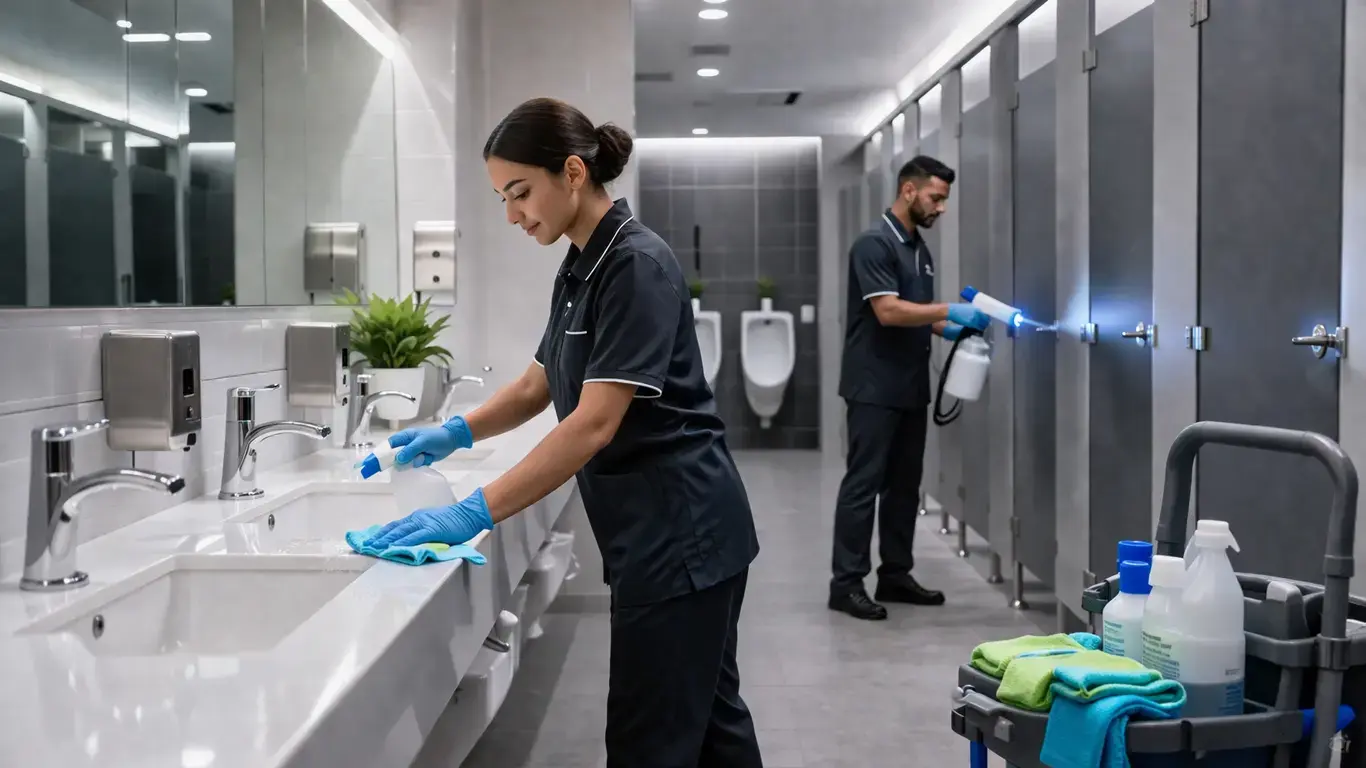
Cleaning staff will tell you something that facility managers sometimes forget: you can clean a washroom perfectly at 7 a.m. and it’ll look wrecked by 9. Sanitary products flushed down toilets cause blockages that take hours to sort out. A bin overflows because someone balanced a takeaway cup on top instead of finding another disposal point. Puddles form around sinks. People are in a hurry. They’re distracted. They’re not trying to cause problems. But the cumulative effect is a washroom that degrades faster than any cleaning rota can keep pace with, and that drives other users away entirely.
Here is what typically happens when budgets tighten. Washroom cleaning drops from four rounds a day to two. Staffing thins out. And then the complaints start. Because a washroom cleaned early in the morning and again mid-afternoon can’t hold up when three hundred people pass through between those two cleans. The gap between the standard and the reality widens at exactly the times when foot traffic is heaviest. Everyone on the ground knows the maths doesn’t work. The challenge is making the people who control the budget see it.
There’s a common misconception that wiping a surface with a damp cloth counts as disinfection. It doesn’t. In most cases, it just moves organisms from one spot to another. Traditional methods routinely miss pathogens lodged in grout lines, under toilet seat hinges, around the bases of dispensers, and inside flush mechanisms. And here’s the part that really gets overlooked: if the cloth or mop isn’t properly sanitised between surfaces, the cleaning process itself becomes a way of spreading contamination. The person doing the work genuinely believes the space is getting cleaner. The microbiology says otherwise.
Damp, stagnant air in a washroom gives mould and airborne bacteria everything they need. Moisture settles on walls. Odours layer on top of each other. The space feels grim regardless of when it was last cleaned.
Industrial odour removal systems address the symptom, but the underlying cause is almost always poor extraction. Older buildings tend to be the worst offenders because their ventilation was sized for occupancy levels the space has long since outgrown. And odour, once it takes hold, overrides everything else in a visitor’s perception. You could have freshly mopped floors and spotless mirrors, but if the air smells stale, people will assume the whole washroom is dirty. It’s not rational, exactly, but it’s how people respond. No posted cleaning log is going to change a gut reaction.
A washroom in a shopping centre or train station might see well over a thousand visits on a busy day. Saturday afternoons are brutal. Every visitor brings their own mix of bacteria and viruses into the space. Door handles, toilet seats, flush buttons, taps, lock mechanisms, they absorb all of it. What makes this especially hard to manage isn’t just the volume. It’s the sheer diversity of pathogens involved. You’re not fighting one type of germ. You’re dealing with potentially hundreds, and no single disinfectant formulation covers every single one equally well.
Plumbing issues are hygiene issues in disguise. A leaking tap leaves standing water that breeds bacteria within hours. Low water pressure means toilets don’t flush waste away properly. A blocked toilet overflows onto the floor and turns a manageable situation into a sanitary emergency that puts the whole washroom out of action.
Industrial water treatment solutions and routine plumbing maintenance aren’t exciting budget items. We understand that. But they’re foundational. Without working plumbing, every other health and safety investment in the washroom is essentially wasted. Pipes and drains aren’t glamorous. They’re just non-negotiable.
One overflowing bin can shift the entire feel of a washroom in minutes. It signals neglect, and visitors read it that way immediately. Used paper towel waste and hygiene products piling up don’t just look bad. They become contamination sources, attracting bacteria and contributing to odour problems. High-traffic facilities generate waste at a pace that catches managers off guard, particularly during events or holiday weekends.
Understanding the problems is one thing. Actually solving them? That takes a plan. The four approaches below have delivered consistent results across the range of facilities we’ve worked with, from compact office blocks to sprawling public venues. The common thread isn’t budget size or building age. It’s whether the approach was thought through in advance or cobbled together after something already went wrong.
Specialist hygiene providers exist for a reason, and it’s not because in-house teams are lazy. Far from it. The gap is about access: access to protocols built across thousands of client sites, to equipment that most building managers won’t have come across, and to training that covers the forgotten spots nobody else checks (behind cisterns, under pipe boxing, inside extract grilles). We’ve seen the difference first-hand. bioCURE provides hygiene management solutions shaped around each client’s actual setup. The service moulds to the building. Not the other way around.
Electrostatic sprayers coat every angle of a surface: edges, undersides, the bits a cloth will always miss. UV-C sanitisers destroy microbial DNA without leaving chemical residue. Neither technology is new. Hospitals have relied on both for infection control for years and the results are well documented. What’s changed recently is the price point. Commercial washrooms can now afford equipment that used to sit exclusively in clinical settings, and honestly, the jump in pathogen elimination over standard spray-and-wipe makes the investment hard to argue against.
High-temperature steam gets into porous materials like grout, silicone sealant, and textured tiles in a way that liquid chemicals never quite manage. It dissolves biofilm on contact and kills bacteria through heat alone. No chemical residue left behind, which matters more than you might think. Cleaning staff who spend hours working with strong chemicals have legitimate concerns about long-term exposure, and facilities with sustainability commitments face restrictions on what products they can use. Steam sidesteps both of those problems. It also reaches the spots that normal routines skip: behind toilets, under vanity units, around cubicle partition bases. One pass and you’re done.
If someone never has to touch a tap, a soap dispenser, or a paper towel unit, those surfaces can’t pass germs between visitors. That’s the whole logic behind touchless fixtures, and it’s hard to poke holes in. Sensor-activated taps and dispensers do cost more upfront than traditional fittings. Nobody disputes that. But we’ve watched the cross-contamination numbers drop significantly in facilities that have made the switch, and the lighter workload for cleaning staff between scheduled rounds tends to offset the price within a year or two, sometimes less.
Calling a dirty washroom “unpleasant” doesn’t begin to cover it. What’s actually happening in a neglected facility is pathogen circulation — organisms moving through surface contact, aerosol inhalation, hand-to-face transfer — and the illnesses that result aren’t trivial. We’re talking about everything from a rough few days of stomach trouble through to proper hospital admissions. The people who bear the worst of it (young children, elderly visitors, pregnant women, anyone with a compromised immune system) are also the people least equipped to recover quickly.
Key Health Risks
When washroom standards slip below a certain point, specific types of illness start cropping up. These four are the ones we hear about most.
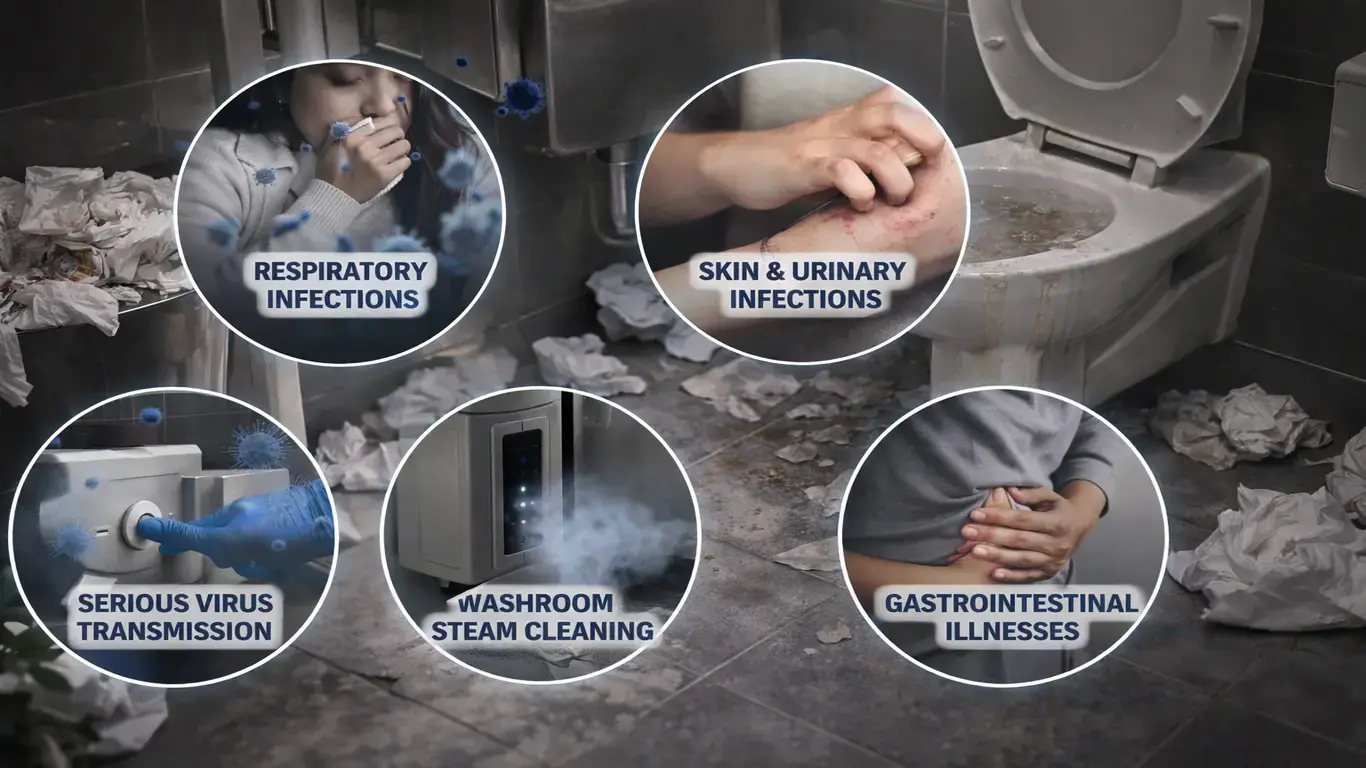
Mould needs moisture and still air. Most poorly ventilated washrooms hand it both on a plate. What happens next is that visitors breathe in spores and bacterial particles without having any idea they’re doing it. Weeks and months of that kind of exposure add up. Worsened asthma, persistent cough, chronic irritation of the airways. Toilet flushing makes things worse, too. It launches faecal bacteria upward in an aerosol plume that studies have measured reaching above head height. Even healthy visitors accumulate exposure over time, though people with pre-existing lung conditions obviously get hit hardest.
It doesn’t take much. A contaminated toilet seat nobody bothered to wipe. A tap handle coated in something you’d rather not think about. Contact with surfaces like these can lead to skin reactions, and in some cases, full bacterial infections needing treatment. Women face a particularly high risk of urinary tract infections when washroom conditions are poor. And then there’s the knock-on behaviour. The natural reluctance to sit down on a visibly dirty public restroom seat often means people put off using the toilet entirely, which comes with its own set of medical consequences that don’t get talked about enough.
Norovirus can last on a hard surface for days. Hepatitis A hangs around even longer. What makes washroom settings so effective at spreading both is a combination that’s difficult to engineer away: shared surfaces that everyone touches, enclosed spaces with limited airflow, and the reality that not everyone washes their hands as thoroughly as they should (or at all, frankly). Door handles and flush mechanisms bear the brunt of it. Nearly every visitor makes contact with them, and very few facilities disinfect them often enough to actually break the transmission chain before the next person grabs hold.
E. coli and Salmonella are behind the majority of washroom-acquired gut infections, and the way people pick them up is frustratingly simple. Touch a contaminated surface. Eat something afterwards, or just touch your face. That’s it. What follows is cramping, diarrhoea, vomiting, and in the worst cases, a hospital visit. Consistent hygiene practices, particularly around handwashing and surface disinfection, do break the chain. But “consistent” is doing a lot of heavy lifting in that sentence. The moment staffing drops or budgets get squeezed, gaps appear. And gaps are all it takes.
The pattern we see again and again is this: organisations post a cleaning schedule, order some products, and tick the box. Then something goes wrong and everybody scrambles. The facilities that don’t end up in that position tend to do a few things differently. They get professional support involved early. They choose products because the evidence backs them, not because the price is lowest. They train cleaning staff properly, not just once but on an ongoing basis. And crucially, they measure what’s actually happening rather than assuming the schedule on the wall reflects reality.
bioCURE partners with businesses and public sector bodies to build that kind of system from the ground up. Our hygiene management solutions go after root causes, the things that keep problems recurring, rather than treating whatever happens to be visible on inspection day. For the organisations that commit, the payoff is real: fewer health incidents, better satisfaction from the people using the facilities, and washrooms that genuinely hold up under daily use.
There’s no single answer because it comes down to traffic. A quiet office washroom and a motorway services washroom are completely different beasts. Busy facilities need multiple cleans daily, with spot checks layered in during peak periods. Facility managers who actually track visitor numbers and adjust their cleaning schedules based on what the data tells them get noticeably better outcomes than those running off a rota somebody wrote three years ago and never revisited.
Hospital-grade disinfectants are the starting point for surfaces. After that, it’s about keeping the basics reliably stocked: soap in the dispenser, paper towel supplies that don’t run dry mid-morning, and consumables that are actually replenished rather than just listed on a procurement order. Worth noting though: a public toilet in a large retail park has very different needs to a small office washroom, so getting professional advice on the right product mix is genuinely worth the conversation.
Rotation of cleaning staff through the space on a set schedule is the backbone of it. Beyond that, it’s about never letting consumables run out (toilet paper, soap, hand-drying supplies) because an empty dispenser creates knock-on hygiene problems that are worse than people realise. Touchless fixtures help enormously wherever the budget stretches to them. And between full cleans, interim checks should zero in on the high-touch spots: door handles, taps, bin lids, flush buttons. Those are the surfaces that deteriorate fastest, and they’re what visitors judge the whole washroom on. Keep them in good shape and the overall sanitary standard holds up far better throughout the day.

