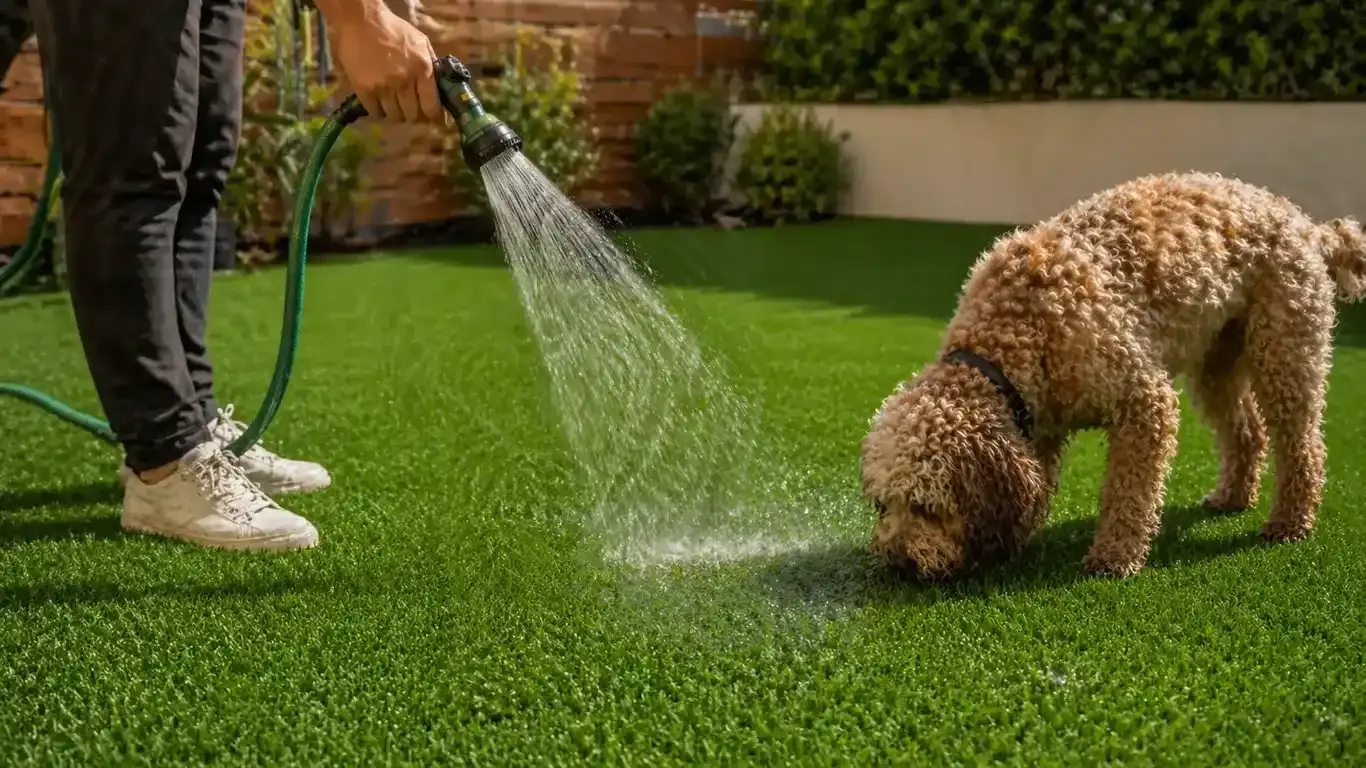
Yardfresh: The Best Way to Remove Pet Odours from AstroTurf & Artificial Grass

If you own pets, you’ve likely faced the challenge of lingering odours on your AstroTurf or artificial grass. Unlike natural lawns, synthetic turf doesn’t absorb liquids the same way, making urine and bacteria build-up a real issue. Many South Africans turn to household disinfectants like Jeyes Fluid, bleach, or even vinegar—only to find these solutions can damage their turf or leave behind strong chemical smells.

So, what’s the best way to remove pet odours from AstroTurf and artificial grass without ruining your outdoor space? Let’s explore the common solutions, their pros and cons, and why Yardfresh stands out as the ultimate answer.

Yardfresh: The Best Way to Remove Pet Odours from AstroTurf & Artificial Grass

Does Artificial Grass Actually Smell?

Artificial grass does not produce odour by itself. What people notice is usually trapped moisture, organic residue, bacteria, and pet waste sitting within the surface or below it. That is what leads to artificial grass odour over time. An installation can look spotless yet still seem oddly smelly after rain or warm weather. For any pet owner, the issue is rarely the material. It is the combination of residue, heat, and poor flushing. A well-fitted surface stays fresh more easily, but even a low maintenance garden still needs attention if you want reliable odour control solutions instead of short-lived masking products. That is the practical difference here.
  • It’s not the plastic – Artificial fibres do not rot or generate bacteria. The surface is inert, so the smell is not coming from plastic.
  • It’s what gets stuck underneath – Moisture carries residue beneath the pile, where debris, dog urine, and bacteria settle, then start breaking down slowly over time.
  • Why does the smell get worse over time? – With time, trapped residue concentrates, airflow drops, and odours rise faster whenever heat, humidity, or rainfall wake them up.

6 Common Causes of Artificial Grass Odour

It almost never starts with one big issue. Not really. It builds slowly. Small things, overlooked, left as they are. Then they begin to overlap. Moisture that does not move. Dirt that settles and stays. Poor flow underneath. Infill that traps more than it should. And care that comes and goes, never quite consistent. Conditions line up, and what sits below becomes harder to ignore, eventually turning into a persistent artificial grass odour problem. This is where thinking borrowed from commercial odour management starts to make sense. Because once that build-up settles in, it does not just disappear on its own.

The result can affect an artificial lawn in private gardens, shared pet areas, or busier settings where odour standards matter just as much as appearance. Understanding the cause is what makes treatment work. Otherwise, people jump between random fixes, try a harsh cleaning agent, and still wonder why the problem returns within days.

1. Pet Urine Accumulation

Pet urine is the most common trigger because liquid may drain, while residue stays behind. That residue includes urea and salts that settle into infill and backing. As bacteria feed on what remains, the area starts to smell sharper, especially in repeat-use spots. If nothing interrupts that cycle, the odour becomes harder to shift, because the source is no longer sitting neatly on top of the surface. In warm conditions.

2. Accumulated Debris

Leaves, dust, dropped food, fur, and other organic matter do more harm than people think. Once they sink below the pile, they hold moisture and begin decomposing. That creates a quiet bacterial feed zone beneath the surface. Even when the lawn looks tidy from above, hidden debris can keep producing odour. Over time, a dirty infill layer turns routine freshness problems into a recurring hygiene issue. Beneath everything. For weeks.

3. Poor Drainage and Standing Water

When water has nowhere sensible to go, it hangs about beneath the surface. It turns a small nuisance into a repeating problem. Drying slows. The layer underneath stays heavy and cool. It becomes far too damp for far too long. That is usually why certain corners always feel worse than the rest. Shade plays a part. So does poor ground preparation. If puddles keep returning, the issue is deeper than surface care. It points to the build-up below. That usually means the base was not done properly in the first place.

4. Lack of Regular Cleaning

It looks easy to maintain. And it is, until it isn’t. Skip the routine for a while and things begin to settle where you do not see them. Quietly. Beneath the surface, layers start forming, holding moisture, holding everything else with it. The same spots get used again and again. That repetition matters. Without interruption, build-up turns into something harder to shift. Much harder. A quick fix will not touch it then. It might soften it for a moment, but that is all. Without consistency, the problem does not disappear. It waits. Then returns, usually stronger than before.

5. Heat and Humidity

Warmth on its own is not the issue. It just reveals what is already sitting there. Speeds it up. What felt manageable earlier in the day can shift quickly as temperatures rise. Air thickens. Moisture lingers longer than it should. That combination does something subtle but important. It lifts what was trapped and carries it upwards. Suddenly, it is noticeable. Hard to ignore. Humidity adds weight to it, slowing down any chance of proper drying. So the cycle continues. What seemed fine in the morning rarely stays that way. By afternoon, it speaks louder.

6. Improper Infill Material

Not all infill behaves well around pets. Some materials trap moisture, absorb residues, or compact too tightly, reducing drainage and airflow. When that happens, odour sits within the system instead of washing through it. Poor-quality rubber can also become a problem in hot conditions, releasing smells more readily. Choosing the wrong infill does not always look like a major mistake at first. Later, it absolutely does. For owners. Over time.

Effective Solutions to Remove Artificial Grass Odour

Fixing it properly starts below the surface, not in the air. Masking never lasts. It fades, and the issue sits there, unchanged. A better approach looks at movement first. Where water goes. Where it doesn’t. Then airflow. Then what has settled over time and stayed there longer than it should have. Order matters. More than people expect.

Do the simple things well, in sequence, and the surface starts behaving differently. It dries quicker. It holds less. It recovers faster after use. Skip steps, rush through it, and you are back where you started. Temporary relief. Nothing more. Consistency does the heavy lifting here.

Effective Solutions to Remove Artificial Grass Odour

Install a Proper Permeable Sub-Base

Everything above the surface depends on what sits beneath it. A permeable sub-base lets water and pet residue pass through instead of collecting under the turf. That reduces bacterial growth and stops damp zones becoming persistent odour pockets. If the installation holds moisture, no surface treatment will fully solve the issue. A proper base creates stability, drainage, and cleaner conditions from the start. It also reduces the risk of repeat smell problems after rain, washing, or busy pet use. Properly.

Use a Specialist Artificial Grass Deodoriser

A specialist deodoriser can help after cleaning, especially during hotter periods when smells become more noticeable. The key is choosing a product made for synthetic surfaces rather than a random household spray. Used correctly, it freshens the area without damaging fibres or leaving a heavy chemical note behind. It is not a substitute for proper cleaning, though. Think of it as support work. Helpful, but secondary. The deeper cause still needs to be handled below the visible surface. For maintenance.

Choose the Right Infill

Infill affects drainage, airflow, softness, and how well the surface handles repeated pet use. Some products trap moisture too easily. Others absorb odour and hold onto it. A better option, particularly in pet-heavy areas, is a material selected for moisture control and easier drying. That choice can reduce long-term maintenance pressure and limit smell build-up before it becomes established. It is one of those decisions people overlook during installation, then wish they had taken more seriously later. Early on. Initially.

Regular Cleaning Routine

Consistency matters more than intensity. A simple routine removes residue before it settles, and that is what prevents bigger odour issues later. Light rinsing, periodic treatment, and attention to favourite pet spots all make a difference. This is where simple tips and tricks matter, provided they are sensible. The goal is not endless labour. It is interruption. When residue never gets the chance to build up deeply, the surface remains fresher, safer, and much easier to manage day after day.

Brush and Remove Debris

A quick pass with a brush does more than tidy the surface. It lifts everything. Keeps fibres standing, not flattened. That alone changes how things move across it. Small bits, barely noticeable at first, tend to settle if left alone. Then they stay.

Over time, that quiet build-up becomes harder to shift. Not obvious, but persistent. A firm brush, used properly, breaks that pattern early. Gentle, regular passes. Nothing aggressive. Nothing rushed. Just enough to keep things moving. Done often, it stops minor build-up turning into something far more time-consuming later.

Professional Cleaning Services

Sometimes it goes deeper than routine care can reach. You can sense it. The surface looks fine, but something underneath has settled in. That is usually the point where outside help makes sense.

A good provider focuses on what sits below, not just what shows above. Careful treatment. Proper flushing. No harsh shortcuts. The goal is to clear what has built up over time without adding new problems in the process. In busier environments, this becomes essential. Less about appearance. More about what is happening underneath.

Use Enzyme-Based Cleaners

Enzyme cleaners work by breaking down the organic material that feeds odour, rather than covering it up. That makes them especially useful on repeat pet spots where residue settles below the pile. Look for an outdoor-safe formula with a clear bio enzyme approach and avoid vague labels. A decent product helps tackle uric acid properly, which ordinary detergents often miss. Used at the right intervals, it supports cleaner surfaces, better hygiene, and more lasting freshness after treatment. For pet areas.

Improve Airflow and Sunlight

Some areas just do not clear properly. Corners. Edges. Places where air barely moves. They stay damp longer than they should. And that is enough. Give it time, and things begin to build underneath. Quietly. More light helps. More movement helps. Even small changes can shift how quickly the surface dries after use or bad weather. Cut things back. Clear the space. Create flow where there was none. It is simple, but it works. Think of it like kitchen grease trap cleaning. Ignore it, and build-up settles in. Keep it moving, and the problem struggles to form in the first place.

Maintenance Schedule to Keep Artificial Grass Fresh Year-Round

It rarely comes down to big interventions. More often, it is rhythm. Quiet, steady attention that stops things settling in the first place. Left alone, build-up happens gradually, then all at once. Harder to deal with by then. Patterns shift across the year as well. Rainfall changes things. So does heat. So does use. That is why a simple structure works best.
Light weekly attention. A more thorough pass each month. Then a broader check as seasons change, just to catch what is starting to form beneath. Nothing excessive. Just consistent. Follow that, and the surface behaves differently. Dries quicker. Holds less. Demands far less effort later on.

Weekly

Once a week is enough. Usually. Just a light pass over the main areas. Nothing heavy, clear what is starting to gather before it settles in properly, because once it does, it stays. Keep it simple. A quick wash. A short tidy. Done. Pay attention to the same spots, the ones used again and again, corners that never quite dry, edges where everything drifts and collects, those matter more than the rest. Do it early. Do it often, and you break the cycle before it builds, leave it too long and it becomes something you have to neutralize later instead of prevent.

Monthly

Each month, give the surface a more thorough clean. Brush the fibres, flush the area more fully, and apply an enzyme treatment where pets use the turf most. This is also the right moment to look for warning signs such as slow drainage, stale patches, or compacted areas. Monthly attention resets the surface before residue settles too deeply. It is preventative work, but it saves much bigger effort later on.

Seasonally

Every few months, inspect the wider system rather than the visible surface. Check whether water is draining as it should, whether infill has compacted, and whether shaded corners remain damp for too long. Seasonal checks also help you spot lifted seams, flattened areas, or changes in surrounding airflow. These details affect freshness more than people realise. Small adjustments made early can prevent odour issues from becoming part of everyday use.

Prevention Tips to Keep Artificial Grass Smelling Fresh

Prevention is cheaper, easier, and more reliable than trying to rescue a surface once odour has settled in. The best results come from habits that stop waste, residue, and damp build-up from becoming established in the first place.

That means acting quickly after pet use, using suitable materials, and making space for occasional deeper cleaning before the area becomes unpleasant. None of this is complicated. It just needs to be done with consistency. When preventative care becomes part of the routine, the lawn stays more hygienic after rainfall, and less likely to surprise you with odours later.

Prevention Tips to Keep Artifici

Remove Waste Immediately

The fastest way to reduce odour risk is to deal with pet mess immediately. Pick up solid waste as soon as you can, then flush the area so residue does not sit and dry into the surface. Even a brief response changes the outcome. Left behind, organic matter and urine residue begin feeding bacteria surprisingly quickly. For homes with pets, this one habit often makes the biggest difference. It is not glamorous. It is effective. Prompt removal reduces deeper contamination, limits repeat smells in favourite toilet spots, and helps every later cleaning step work properly instead of chasing old residue.

Use Antimicrobial Infill

Where pets use the same part of the lawn often, antimicrobial infill can add support. It does not replace cleaning, but it can reduce bacterial activity within the surface and help moisture move more efficiently. That combination matters because trapped residue is what turns pet use into an odour problem. The right infill choice works in the background. It supports drainage, helps keep your artificial turf drier after use, and lowers the chance that repeat visits to one spot will create stubborn smell zones that are much harder to correct later. Over time, that support adds up in smaller gardens.

Deep Cleaning

Routine care handles most everyday build-up, but occasional deeper cleaning prevents long-term accumulation. That may mean flushing problem areas thoroughly, brushing out trapped debris, and treating sections where pets return repeatedly. It is also the point where people notice whether the surface still drains well or whether compacted areas are beginning to hold residue. A deeper clean helps keep that surface fresher without relying on fragrance-heavy fixes. It also gives you a chance to deal with hidden build-up before it becomes far more difficult to shift. Appearance benefits too, especially after periods of wet weather. And repeated pet use.

Common Odour Removal Products for AstroTurf & Their Downsides

Many people reach for whatever is in the cupboard, assuming any strong-smelling product will solve a stronger smell outdoors. That is usually where things go wrong. Artificial grass needs treatment that deals with residue without harming fibres, backing, pets, or surrounding surfaces. Some common products do part of the job, at least briefly. Others only make the problem harder to manage later. The real test is not whether a product smells powerful on application. It is whether it removes the source, stays safe around animals, and avoids leaving behind damage, residue, or a second odour problem you have to correct.

Jeyes Fluid

Jeyes Fluid A household name in odour removal, but is it safe for artificial grass?

✅ Pros:

    • Strong disinfectant
    • Helps eliminate bacteria and germs
    • Can remove some odours when diluted

❌ Cons:

    • Highly toxic to pets when wet
    • Strong chemical smell that lingers
    • Can stain or damage AstroTurf fibres over time
    • Harmful to the environment (contains creosote derivatives)

Verdict: While Jeyes Fluid is a powerful disinfectant, it is not designed for use on synthetic grass and may cause more harm than good.

Bleach & Ammonia-Based Cleaners

Bleach & Ammonia-Based Cleaners south africa

Many homeowners assume bleach is the go-to solution for bacteria and odour removal.

✅ Pros:

    • Kills bacteria effectively
    • Readily available

❌ Cons:

    • Highly corrosive—damages AstroTurf backing and fibres
    • Toxic to pets and humans
    • Leaves behind a strong chemical odour
    • Can discolour synthetic grass over time

Verdict: Bleach is not recommended for AstroTurf or artificial grass. It causes more harm than good and is dangerous for pets.


Vinegar & Baking Soda

Vinegar & Baking Soda Vinegar & Baking Soda: Some DIY cleaning blogs suggest using a mix of vinegar and baking soda. ✅ Pros:
    • Natural and non-toxic
    • Affordable
❌ Cons:
    • Not strong enough to fully eliminate deep-set odours
    • Can damage the turf’s backing with frequent use
    • Leaves a temporary vinegar smell
Verdict: While this method is safe, it doesn’t effectively remove stubborn pet urine odours and may degrade your artificial grass over time.

Odour Neutralisers

Enzyme-Based Odour NeutralisersOdour Neutralisers are designed to break down odour-causing bacteria at the molecular level.

✅ Pros:

    • Targets urine and organic matter
    • Non-toxic and pet-safe
    • Biodegradable and environmentally friendly
    • Doesn’t damage AstroTurf or artificial grass

❌ Cons:

    • Not all odour cleaners are equally effective
    • Some brands contain hidden chemicals

Verdict: A high-quality odour neutraliser is the most effective solution for pet odours on artificial grass, provided it’s designed for outdoor use.

Why Yardfresh is the Best Solution for Pet Odour on AstroTurf?

Now that we’ve covered what doesn’t work, let’s talk about the ultimate solution—Yardfresh. Specially formulated for South African homes, Yardfresh is a pet-safe, enzyme-powered odour eliminator designed for AstroTurf, artificial grass, paving, and tiles.

What Makes Yardfresh Different?

✅ Powered by nature: Breaks down odour-causing bacteria at the source rather than masking the smell.
✅ Non-Toxic & Pet-Safe: Unlike Jeyes Fluid or bleach, Yardfresh is safe for pets and won’t harm synthetic grass.
✅ Eco-Friendly & Biodegradable: Contains no harsh chemicals that pollute the environment.
✅ No Stains or Residue: Won’t discolour or weaken AstroTurf fibres.
✅ Long-Lasting Freshness: Eliminates odours instead of covering them up.
✅ Multi-Surface Use: Works on paving, tiles, patios, and kennels too.

How to Use Yardfresh for Maximum Effectiveness

  1. Dilute if Needed – While Yardfresh is powerful straight from the bottle, you can dilute it for routine maintenance.
  2. Apply Generously – Spray directly onto the affected areas of your AstroTurf, artificial grass, or paving.
  3. Allow to Soak – Give the time to break down odour-causing bacteria (5–10 minutes is ideal).
  4. Rinse or Leave to Dry – For best results, leave it to air-dry.
  5. For deep-set odours, use Yardfresh undiluted and allow extra soaking time.

The Clear Winner for Pet Odour Removal

If you want a safe, effective, and long-term solution for pet odours on AstroTurf and artificial grass, Yardfresh is the #1 choice in South Africa. Unlike Jeyes Fluid, bleach, or vinegar, it won’t damage your turf, harm your pets, or leave behind toxic residues.

Make the switch today and keep your outdoor spaces fresh, clean, and pet-friendly!

🌿🐶 👉 Shop Yardfresh now: Click Here

FAQs

How often should I treat artificial grass if I have multiple pets?

If several pets use the same areas daily, treat those sections weekly and do a fuller deodorising clean monthly. Heavier use means faster residue build-up. Watch the surface, not the calendar alone. If smells return early, increase frequency before residue settles deeper into the infill and starts lingering below. Outdoors.

Is it ok to power wash artificial grass?

It can be, but only with care. Use moderate pressure, keep the nozzle moving, and avoid blasting seams or backing. A garden hose is safer for routine care on fake grass. Power washing suits occasional deeper cleaning, not daily maintenance, especially where drainage weaknesses or older joins already exist. Safely.

Does artificial grass smell worse in summer?

Yes, usually. Heat does not create the problem, but it amplifies it. Warm weather speeds bacterial activity and makes trapped residue release odour more quickly. That is why urine smells seem stronger in summer afternoons. The source was already there; higher temperatures simply make it much easier to notice outside.

Can rain naturally clean pet urine from artificial grass?

Rain helps dilute surface residue, but it rarely removes the full cause of pet odour. If urine has settled into the infill or base, rainfall alone will not fix it. It may even revive old smells as trapped residue gets wet again. Proper cleaning is still needed for lasting freshness.

Why does my artificial grass smell worse at certain times of the day?

Temperature and moisture levels change through the day, and that affects how odour is released. Warm afternoons, damp mornings, or humid evenings can all make the same area smell stronger. The surface is responding to conditions. The smell is trapped residue becoming more noticeable under changing weather patterns. Outside, naturally.

Can pet odours damage artificial grass permanently?

The smell itself does not usually ruin the turf, but neglected residue can affect hygiene, discolour surrounding areas, and make the surface harder to refresh. Repeated contamination may also expose weaknesses in drainage or installation. Addressed early, most odour issues are reversible. Ignored for months, they become harder to manage.

How long does it take for odours to fully disappear after treatment?

That depends on how deep the residue sits and what product you use. Light issues may improve the same day. Heavier build-up usually needs repeated treatment. A good odour neutraliser spray can work quickly, but entrenched odour in the base or infill may take several applications to resolve properly.

Get in touch to buy Yardfresh

Partner with bioCURE today for eco-friendly, professional solutions.

Noleen Samuels
Follow me
WhatsApp
bioCURE