
Factories and plants face odour problems all the time – these are part of normal operations. Bad smells can quickly turn into a real nuisance for staff and local residents. What should you do to tackle this issue? Using effective odour control is essential to keep things running smoothly and maintain good relationships with the community. As your waste management partner, bioCURE sees every day how industrial smells affect work and life. This guide shares simple tips for managing industrial odours.
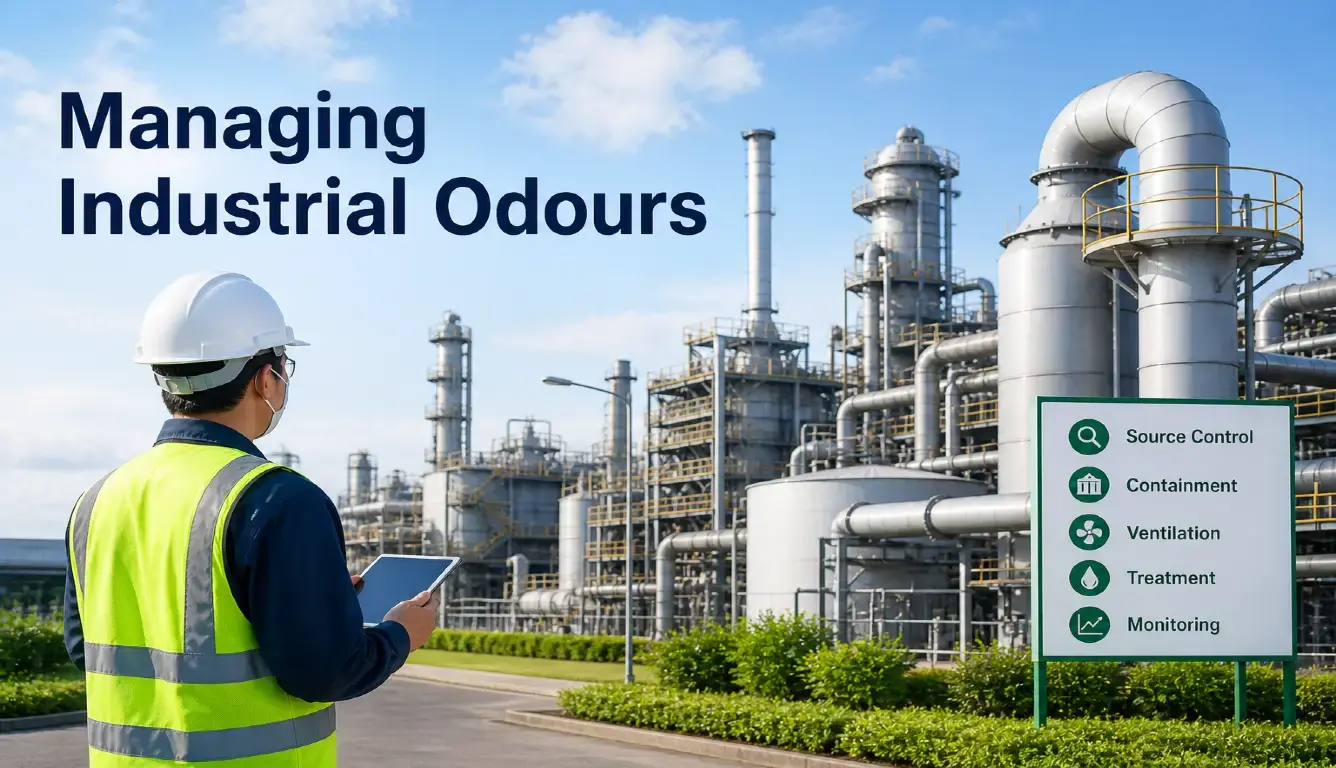
No two industrial sites will have the same odour challenges. When it comes to managing industrial odours, there is no single answer that fits every situation, so it makes sense to use a mixture of different control systems. Combining several methods lets you address sources of odour more thoroughly and keeps the air cleaner across your industrial environment. Below, we share eight tips you can use together to manage odour molecules and raise air quality where you work.
Before you can do anything about an odour issue, you have to know exactly where it starts. Begin by tracing the problem to its true source. Does it appear in a certain area of the factory, or is it maybe tied to wastewater treatment in your facility? Odour molecules are often found near drains in industrial settings. Once you work out the source of the odour, it’s easier to target your control solutions and focus them where they are needed most.
If you leave containers uncovered, odorous compounds and emissions can spread into the air quickly. To limit this, always make sure bins and tanks are closed properly. Keep all waste stored with tight covers, and use sealed storage for any raw materials. When you contain source materials, nuisance odours do not travel as easily. This simple action works well for cutting down odours before they go outside your facility and cause problems for people in the area.
Mess and poor routines allow unnecessary smells to build up. Having a tidy workspace is a simple but powerful way to stop unwanted odours from developing. Clean up rubbish, sweep floors, and dispose of waste quickly using good waste management. Wipe up spills in areas like food processing and other industrial operations before they attract bacteria or start breaking down. Stick to regular routines. Managing waste right away stops odorous compounds from forming and keeps the environment at your industrial sites much fresher.
Good airflow is important in any industrial building as it helps manage odour and emissions. Keeping a slight negative pressure in key areas draws air inward, stopping polluted air from leaking outside. Ventilation and air filtration systems should collect stale air, not let it escape unchecked. Use scrubbers or filters before releasing any air outdoors, as this cuts down on the release of harmful compounds. The right setup supports safety and keeps the work environment comfortable for everyone.
When your site is near homes or businesses, it’s important to keep neighbours informed. People notice an unpleasant smell quickly, and this can cause concerns in the community. Offer a direct way for local residents to share any issues, such as a specific phone line or email address for odour complaints. Listen to what people say and explain what actions you’re taking. Clear, honest answers help build trust, support your reputation, and make it easier to manage any problems that come up.
If you let equipment break down or skip checks, strong odours can escape fast. Set up a checklist so you regularly look over your tools, control equipment, and process settings. In areas with wastewater treatment, it’s important to keep oxygen levels high to block nasty odours that develop when there isn’t enough air. Are you carrying out these checks each day? Paying attention to inspections and fixing small problems helps stop specific odours, keeps the site in good shape, and avoids bigger issues later.
Sometimes, air needs to be treated directly at the source to truly eliminate odours. Our fogging systems disperse specialised neutralising agents into the air, targeting strong odour molecules such as hydrogen sulfide, ammonia, and mercaptans. These fine droplets interact with airborne contaminants, breaking them down and reducing their impact. This approach doesn’t simply mask unpleasant smells—it actively neutralises them, helping to clean the air and significantly reduce odour emissions.
People are the foundation of any effective odour control programme. Each team member needs to understand how their daily tasks might cause odour issues. Train staff to spot leaks, odd smells, or faults with equipment, and encourage fast reporting. Good training gives everyone the skills to use odour control systems properly and to react swiftly if problems start. When employees stay alert and work together, your business can maintain effective odour control and meet environmental rules with confidence.
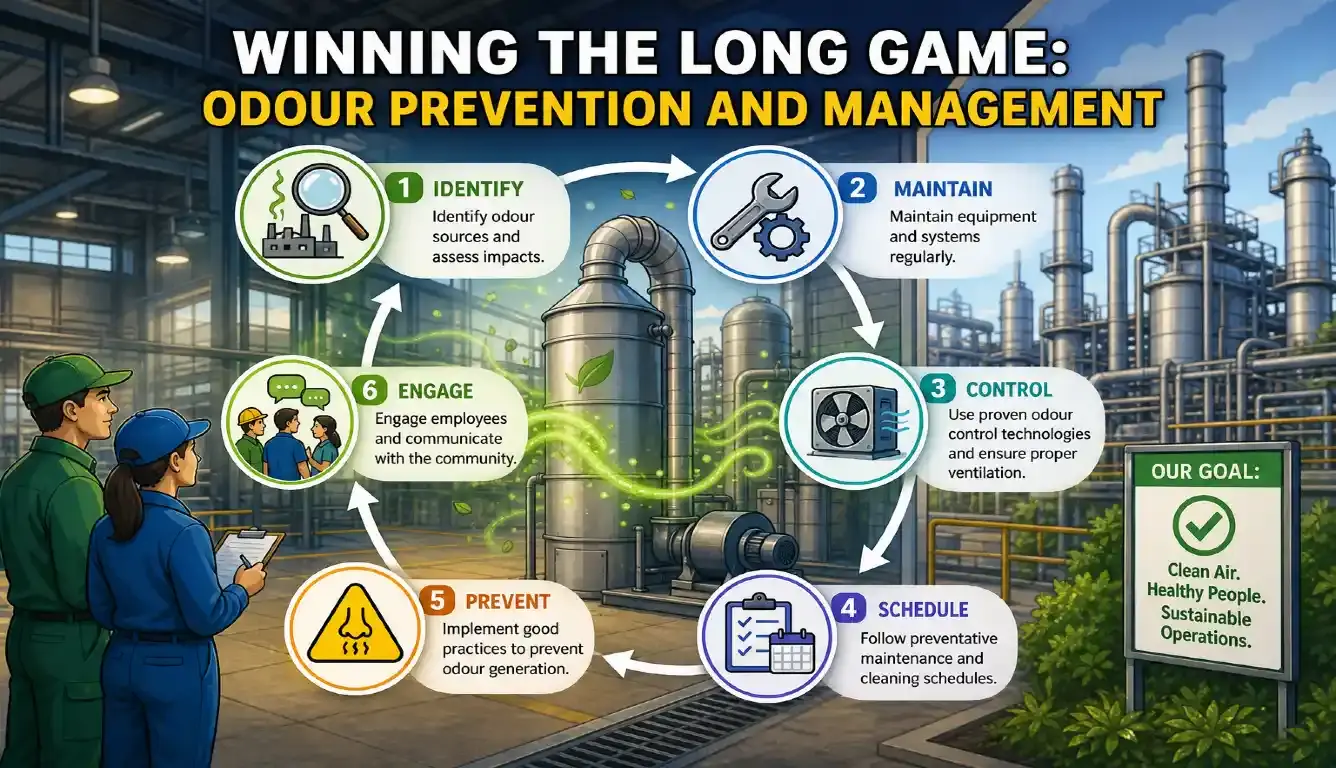
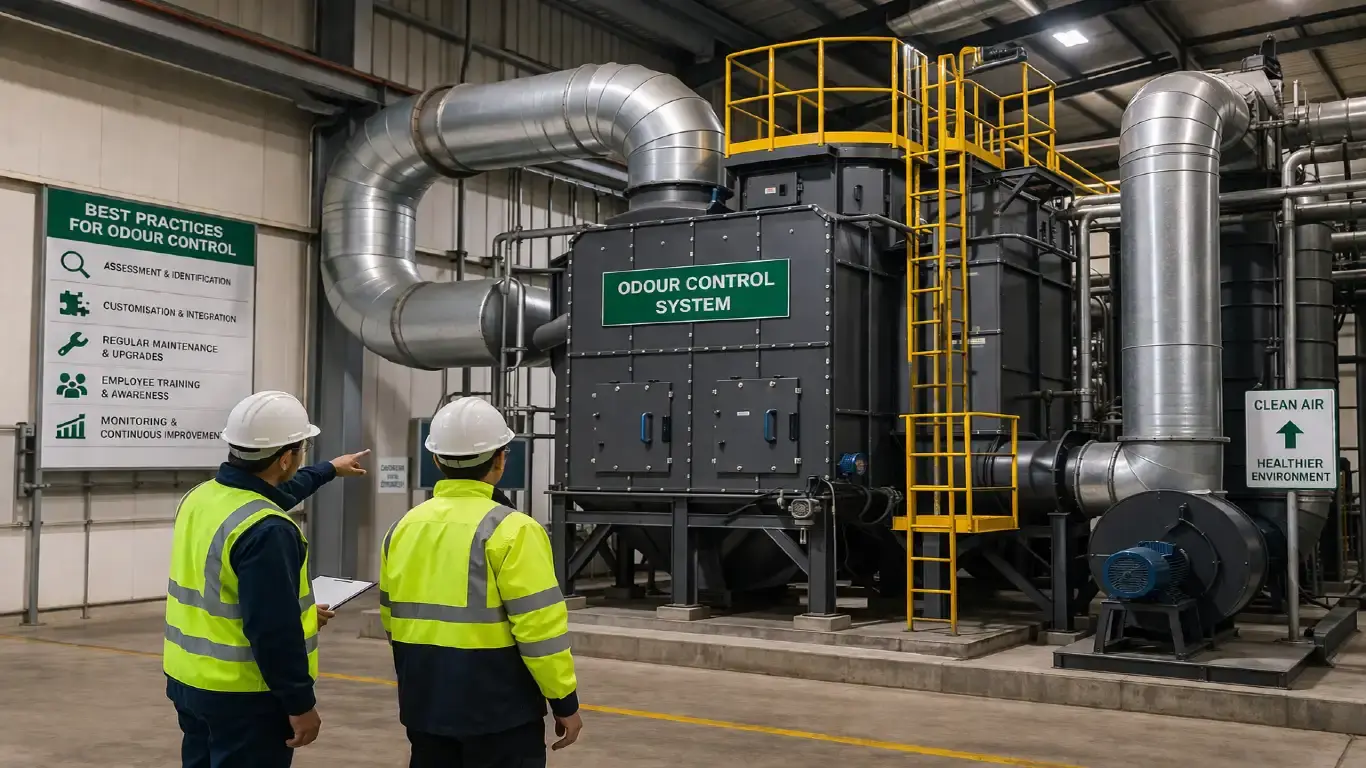
Just putting in expensive equipment won’t solve ongoing odour problems on its own. Getting good results depends on planning and being careful with each step. Fit your control solutions into the daily work, so they become a normal part of the operation. Here are some key actions to help keep odours managed. Focus on these steps and your business can handle industrial odour challenges more effectively.
Controlling odours in industry means looking after air quality day in and day out. This job is not something you do once and forget. You need a plan that brings together the right tools, practical training for staff, and regular support from a waste management partner such as bioCURE. When you understand how emissions affect both people and the environment, you’re in a better place to respond. Acting on odour issues early can protect your community, keep work running smoothly, and prevent unexpected problems for your business.
Yes, some industrial odours are more than just unpleasant – they can actually be harmful, depending on what’s in them and where they come from. For example, hydrogen sulfide can pose a health risk if levels get too high, and other gases from industrial activity can be unsafe as well. It’s important to regularly monitor air emissions so staff and those living nearby are not put at risk from any dangerous compounds.
Reviewing your odour control steps about twice a year is wise. This makes sure that things like filters are not clogged and scrubbers keep running properly. If you expand your facility or update any process, you should inspect your control systems sooner. Regular checks help you keep up with compliance and mean your equipment keeps doing a good job of handling emissions.
Proper odour management supports your business in several ways. Neighbours around industrial facilities notice when bad smells are handled, so complaints go down. This gives your business a stronger reputation and fewer troubles with regulations. Staff also benefit – they get to work in a cleaner, more pleasant place, which helps with morale. Having robust odour systems lowers the chances of receiving fines. It also helps your industrial site run without sudden odour-related interruptions.

