
Top Causes of Commercial Drain Blockages
Commercial drain blockages do not usually begin with a dramatic failure. They start smaller. Grease cooling inside a pipe. Paper products catching on a rough edge. Food particles slipping past a strainer. A little grit, a little soap, a little careless flushing.
Then the system slows. In commercial environments, that slow-down matters because the drainage system is being used all day, often by staff, customers, visitors, contractors, and cleaning crews. One clog can become an overflow. One overflow can become disruption, hygiene risk, and expensive emergency work. That is why the causes need to be understood early.

What Causes Commercial Drain Blockages?
Commercial drainage works harder than domestic drainage. Much harder. Unlike residential pipework, commercial plumbing systems deal with higher usage volumes, more waste, larger kitchens, busy restrooms, floor drains, cleaning chemicals, grease, debris, and constant water movement from different parts of the premises.
A sink in a café is not used like a sink at home. It takes punishment. So do toilets, gullies, fat traps, and external drains. When materials accumulate over time, the plumbing system begins to narrow inside pipes, flow weakens, and small drain issues become real plumbing problems.
Top 10 Common Causes of Commercial Drain Blockages
The common causes of drain blockages in commercial establishments are usually ordinary things doing quiet damage. Not glamorous. Not complicated. Grease down kitchen sinks. Wipes after a flush. Paper towels in a restroom bin that was ignored, then in the toilet instead.
Food debris, limescale, roots, rubble, chemicals, and damaged pipework all play their part. Some minor blockages can be cleared before they spread. Others become severe blockages and need professional drain cleaning, high-pressure water jetting, or a commercial plumbing specialist to clear blockages safely.
1. Grease, Fat, and Oil (FOG Build-up)
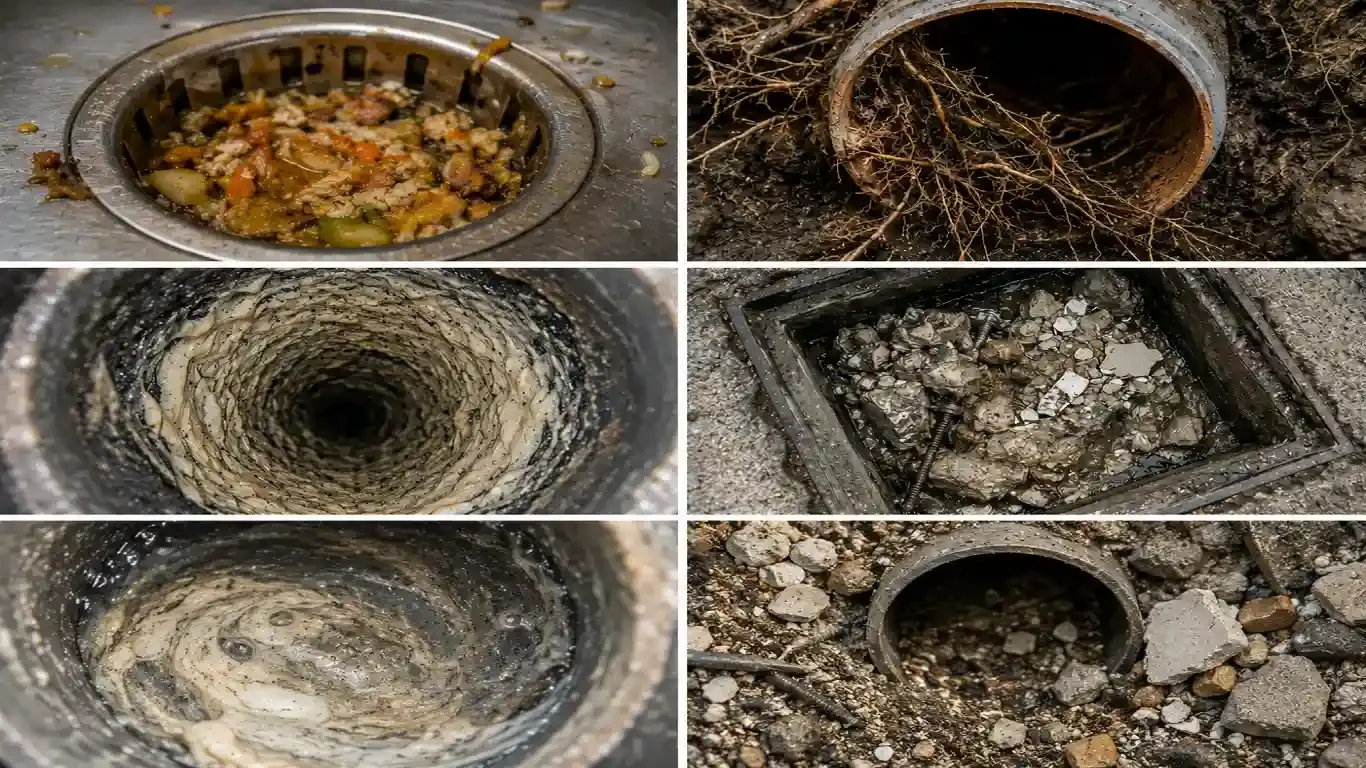
Grease is trouble because it lies. Warm fat looks harmless when it moves down the drain. Then it cools. It thickens. It begins to solidify against the drain pipe wall, especially where water flow slows or bends. Food particles stick to it, then more grease sticks to the food. Layer after layer. In busy kitchens, this can clog drains faster than expected, causing smells, backups, and drain unblocking callouts during the worst possible moment.
2. Foreign Objects and Improper Waste Disposal
Foreign objects create blockages because the drainage system was never meant to carry random waste. Cloths, gloves, bottle tops, food labels, wrappers, mop fibres, and plastic fragments can catch inside pipework. That is enough. Once one item gets stuck, everything else gathers behind it. In systems in commercial buildings, the volume of water and waste keeps feeding the blockage until proper drainage is lost. It may look like a simple clog, but the cause is often hidden.
3. Food Waste and Organic Debris
Food waste causes drain problems because it does not always wash away cleanly. Rice expands. Coffee grounds settle. Peelings catch. Sauces, fats, and soft scraps coat the pipework. Then comes the smell. In commercial kitchens, food debris can combine with grease and form a thick, sticky mass that is difficult to remove without professional cleaning. A strainer helps. So does proper scraping. Still, when staff rush, food particles end up where they should not.
4. Tree Root Intrusion
Tree roots are patient. That is the problem. Roots naturally move towards moisture, so even a small crack in underground drainage can attract them. Once inside, they grow through the pipe, catching wipes, silt, paper, and other waste as it passes. Flow reduces. Then blocks return in the same area, again and again. A drain snake may open the line briefly, but if the pipe is cracked, the roots will come back.
5. Soap Scum and Cleaning Chemicals
Soap scum sounds soft. It is not always soft inside pipework. Mixed with grease, minerals, dirt, hair, and cleaning chemicals, it can form a stubborn residue that clings to the inside of pipes. Some businesses then use drain cleaners too often, hoping for a quick fix. Bad move, sometimes. They may shift minor blockages, or they may damage pipework and push the drain obstruction further along. Baking soda and vinegar will not fix hardened commercial build-up.
6. Construction Debris and Site Contamination
Construction debris is brutal on drains. Plaster dust, cement, grit, sealant, paint residue, rubble, screws, and packaging fragments do not belong in any drainage system. Yet during refurbishments, washdowns, and site cleaning, they can easily enter gullies, sinks, and storm drains. At first it may only look like dirty water. Then the debris settles. Sometimes it hardens. Flushing the drain will not solve that. High-pressure water or specialist drain services may be needed to clear the blockage properly.
7. Non-Flushable Paper Products and Wipes
Non-flushable products are one of the easiest ways to cause blockages in a busy restroom. Wipes, paper towels, nappies, sanitary products, and thick tissues may disappear after a flush, but that does not mean they have broken down. They travel. They catch. Then they hold other waste behind them. In commercial plumbing, the build-up can happen fast. Bins, signage, and staff checks sound basic, but they prevent drain clogs better than panic later.
8. Mineral Deposits and Limescale
Limescale is slow, but it is persistent. In hard-water areas, minerals build up inside pipes, taps, outlets, and appliance connections, reducing the space water has to move through. The surface becomes rough. Grease sticks more easily. Soap sticks too. Then debris follows. Drains in commercial premises may become clogged even when nobody has done anything obviously wrong. That is what makes scale frustrating. It hides until slow drainage becomes part of the day.
9. Neglected Maintenance and Grease Traps
Neglected maintenance is where small drainage issues become expensive ones. Grease traps fill. Records get missed. Staff assume someone else cleaned them. Nobody checks the flow until smells appear or wastewater backs up. Then the business is reacting, not preventing. A maintenance routine should include grease trap cleaning, drain inspections, and planned drain maintenance. It sounds dull. It saves money. Preventive care is far cheaper than emergency plumbing services after trading has already been disrupted.
10. Broken, Cracked, or Collapsed Pipes
Broken pipes change everything because the problem is no longer only waste. It is structure. Cracks let soil in. Collapsed sections stop water moving. Misaligned joints catch paper, grease, silt, and food waste. The line may be cleared for a while, but it blocks again because the pipe itself is damaged. A professional plumber may need CCTV equipment to see inside pipes and decide whether repair, relining, or replacement is needed.
Warning Signs of a Blocked Commercial Drain
Blocked drains usually speak before they fail. Not loudly. Slowly. Water taking longer to leave. Gurgling after a flush. Odours near kitchen sinks or floor drains. Standing water outside. Pests appearing where they were not before.
These signs are easy to dismiss during a busy day, but commercial establishments cannot afford to ignore them. Drainage problems affect hygiene, staff safety, customers, stock areas, and operational efficiency. If signs repeat, the issue should be addressed quickly, before a drain obstruction becomes overflow, closure, or costly repairs.
Slow drainage across multiple areas
One slow sink may be local. Several slow outlets are different. If wash basins, kitchen sinks, toilets, gullies, and floor drains are all draining badly, the blockage may sit deeper in a shared line or sewer connection. That is when the problem becomes more serious. You are no longer dealing with one outlet. You are dealing with the wider plumbing and drainage network, and it needs proper inspection.
Repeated blockages in the same place
When the same drain blocks again, the message is fairly clear. The cause is still there. Grease may be coating the pipe. Scale may be narrowing it. Roots may be growing back. Or damaged pipework may be catching waste in the same place every time. A quick unblock the drain approach may buy time, but not much. Repeated failures need investigation, not another temporary patch.
Gurgling noises from pipework
Gurgling pipework is the sound of air struggling through restricted flow. It may happen after flushing the drain, emptying a sink, or using commercial equipment that discharges water quickly. Sounds harmless. Often is not. Air should move through the system without drama. When it cannot, the pipework may already be partly blocked. If ignored, gurgling can be followed by odours, slow drainage, and wastewater backing up.
Standing water around external drains
Standing water around external drains should not be treated as normal puddling. It may point to blocked storm drains, silt build-up, collapsed pipework, leaves, grease, or contamination from the surrounding site. In loading bays, yards, and car parks, water pooling can become a slip hazard fast. It can also carry waste back towards entrances or service areas. Not good. Persistent standing water needs checking before it spreads.
Increased pest activity
Pests do not appear around drains for no reason. They follow smells, moisture, food waste, grease, and organic residue. Rodents and insects are especially drawn to damp areas where material has collected and stopped moving. Once pests arrive, the issue is no longer just drainage. It becomes sanitary. Health and safety concerns follow. Increased pest activity near drains should trigger a drainage check, not only a pest control visit.
How to Prevent Commercial Drain Blockages
Preventing commercial drain blockages is not about one magic product. It is behaviour plus routine. Staff need to know what they are doing. They need to know what not to flush or rinse, and what not to scrape or pour away. Grease traps need cleaning before they are full, and drains need to be inspected before they show signs of problems, or better said before they start smelling badly.
Professional drain maintenance should be planned around site use. This is the best way for businesses to prevent future drainage issues. This is how they can protect their sanitary conditions, reduce disruption, and keep commercial plumbing working under pressure. This is not a complicated task, but it has to be consistent in order to provide the right results.
- Scheduled Maintenance
Scheduled maintenance finds build-up early, keeps drains moving, and reduces emergency callouts when the site is busiest. - Grease trap cleaning
Grease trap cleaning stops fats, oils, and food particles reaching pipes, where they cool and harden. - Staff waste disposal training
Staff waste disposal training shows people what not to flush, pour, rinse, scrape, or force into drains. - Drain inspections
Drain inspections reveal cracks, roots, limescale, and hidden restrictions before they turn into serious plumbing issues. - Canopy filter maintenance
Canopy filter maintenance reduces grease residue during kitchen cleaning, protecting nearby sinks, outlets, and drainage points. - Avoiding chemical overuse
Avoiding chemical overuse protects pipework from damage and reduces reliance on products that rarely solve root causes.
When Should You Call a Commercial Drain Specialist?
Bring in expert help when the same fault keeps coming back. Or when water starts rising where it should be moving away. Bad smells, outside pooling, slow emptying across several areas, or a blockage your staff cannot deal with safely are all signs that it has gone beyond a quick fix.
Act early. Waiting rarely helps. In busy public spaces, a small issue can quickly affect hygiene. That instantly makes the people using the building unsafe, so businesses must pay extra attention to all details and prevent problems before they happen. Once they happen, it means it’s too late.
Preventing Commercial Drain Blockages Starts with Understanding the Causes
Commercial drain blockages make more sense when you see how they form. Grease cools. Wipes catch. Scale hardens. Food waste settles. Roots enter cracked lines. Construction grit sits where water slows. Damaged pipes trap everything that passes.
None of this is unusual. That is the point. The risk comes from repetition. With professional plumbing support, staff training, regular drain cleaning, and a clear maintenance routine, businesses can prevent drain clogs in commercial spaces and keep wastewater moving safely.
FAQs
How often should commercial drains be cleaned?
Most commercial drains should be cleaned at least once or twice a year, but high-use sites need closer attention. Food premises, schools, care homes, offices, and busy washrooms may need more frequent professional drain cleaning. Usage matters. Waste type matters too. A proper schedule should be based on risk, history, and site layout.
Can employees cause drain blockages?
Yes, employees can cause drain blockages through everyday habits. Not deliberately. Pouring grease into a sink, flushing wipes, rinsing food waste away, or putting paper towels into toilets can all create drainage issues. Training helps because it makes the hidden consequences visible. Clear bins, signs, and simple rules make better habits easier.
Can chemical cleaners fix commercial drain blockages?
Chemical cleaners can sometimes move light residue, but they are not a reliable fix for commercial blockages. They may damage pipework, create safety risks, or leave the real problem untouched. For severe blockages, professional drain services are safer and more effective. Jetting, inspection, and mechanical cleaning deal with the actual obstruction.
What happens if a blocked drain is not fixed quickly?
If a blocked drain is not fixed quickly, wastewater can back up, odours can spread, and hygiene risks can rise. Then comes disruption. Staff complaints. Customer issues. Possible closure in sensitive areas. Pressure may also damage pipework, causing leaks or overflow. Early action is usually cheaper than waiting for failure.

- Preparing Hotels and Guest Houses for the Holiday Season - October 20, 2026
- The Importance of Effective Waste Management in Retirement Homes and Villages - September 24, 2026
- How Municipalities Can Extend the Life of Existing Wastewater Infrastructure - September 15, 2026
