
In South Africa, waste audits are designed to check if an organisation meets environmental regulations, even when waste activities are supported by an external partner. Inspectors focus on how waste is generated, stored, and disposed of, and whether environmental requirements are followed. The goal is to protect land, water, and communities. Audits assess environmental adherence across daily operations, not just written plans. The competent authority also reviews how partners support compliance and whether responsibilities are clear. A proper environmental protocol audit helps organisations see if their systems work in practice. It also confirms that using a waste management partner still meets legal duties.

A waste management audit follows a step-by-step guide that looks at waste from start to finish across the whole site. Inspectors first define the scope of the audit so they know which activities, waste streams, and areas to review. They then evaluate waste storage areas, handling methods, and contractor arrangements. This audit goes beyond checking bins and paperwork. It also reviews air emissions, emission risks, and possible air pollution linked to waste handling. Data collection plays a big role and includes records kept by waste management partners. The inspector compares current waste management practices to legal requirements. A gap analysis highlights weak points. The audit report then explains areas for improvement and actions needed to follow compliance, even when waste services are outsourced.
In South Africa, the regulatory authorities or independent experts carry out compliance audits related to waste. The government employees leading these audits are often from national, provincial, or local levels, depending on the nature of the operation and the license requirements. External auditors sometimes get engaged to offer a non-biased evaluation.
Such professionals are well-versed in the environmental laws, the industry’s vulnerabilities, and the inspection procedures. They also know how the waste management company interacts with the customer and the distribution of duties. Their responsibility is to conduct an unbiased assessment of the systems and not to find fault with the organisations. The inspectors check documentation, the state of the site, and the arrangements with the partner. Well-defined functions between the organisation and its partner help in compliance and in preventing confusion during audits.
Companies undergo audits on various occasions and for various purposes. Certain audits are intended to be the audits of compliance with the law or routine checks of the institution’s health. Others take place after someone lodges a complaint, an incident occurs, or pollution is reported. It is also possible for audits to take place when a company is applying for or renewing its waste management or emissions license.
The reason for this is that waste can harm the air, put more strain on the landfill, and affect public health if not properly managed. The inspectors want to see that the activities are recorded and supervised in a safe way. They also want to check if the waste management partners are compliant with the law. Auditing done frequently helps to spot inefficiency more quickly, and thus cuts down on environmental degradation and a company’s legal and business risk.
Inspectors impose a number of laws that are still valid when the waste is handled by a partner. These laws are meant to cut down waste and protect both human and environmental health. They encourage the reduction, reuse, recycling, and safe disposal of waste. The obligations under each law are divided between the organisation and the contractor. Inspectors make sure that these duties are comprehended and practised. The legal framework thus not only caters for environmental goals but also guarantees proper identification and management of waste.

NEMWA focuses on the full life cycle of waste. It requires organisations to evaluate their waste and find ways of reducing waste generation. The act promotes waste reduction and reuse before disposal. Inspectors check if waste is diverted from landfill where possible. They also review how waste partners support compliance. Even with outsourcing, responsibility remains with the organisation. NEMWA protects population health and encourages best practices across all waste activities.
NEMA sets general environmental duties. It requires organisations to prevent pollution and environmental damage. Inspectors assess whether waste activities meet specific environmental standards. This includes managing air emissions, noise and offensive odours, and waste risks. NEMA applies to all parties involved. Working with a partner does not remove responsibility. The act encourages long-term care and proactive management.
Municipal by-laws control local waste handling rules. Inspectors check compliance with storage, collection times, and approved contractors. Provincial rules may also apply. These laws often affect how partners operate on-site. Organisations must ensure their partners follow local rules. Non-compliance can lead to fines or service disruptions. Local compliance supports cleaner communities and better air quality.
Some industries face stricter waste rules. Healthcare, laboratories, and manufacturing often handle hazardous materials. Inspectors review how these wastes are managed with partners. They check storage, labelling, and disposal methods. Industry rules protect workers and the public. Organisations must ensure partners meet these standards. Clear oversight reduces risk and supports compliance.
Documentation remains the responsibility of the organisation, even when using a partner. Inspectors rely on records to understand how waste is managed. These documents show procedures to secure compliance. Missing records raise concerns. Clear documentation provides valuable insights into waste flows and risks. It also shows that the organisation actively manages its partner relationship.
The inspectors monitor the waste handling that is done during regular daily operations very carefully. The organisation is responsible for the on-site practices even when a waste management partner is utilised. The proper waste segregation makes recycling and waste reduction goals easier to achieve and also reduces the quantity of waste going to landfills. The risk of pollution, spills, and safety incidents increases with poor handling. Inspectors try to find waste areas that are clean, organised, and well managed. The good practices not only enhance workplace safety but also demonstrate that the waste systems are actively controlled and not neglected.

On-site waste separation should always be at the point of origin and not at a later stage. Inspectors verify after every shift if workers have been trained in and are practising separation rules. Employees must adhere to the protocols regardless of whether a waste management partner helps with advice or provides containers. Proper separation assists in recycling and waste reduction and lowers waste disposal in landfills. It’s also a way to lower disposal fees and avoid ruining the recyclables with impurities. Good separation is an indication of high awareness and daily compliance.
The proper marking and colour-coding of waste containers are very important for the safe and proper handling of waste. Inspectors verify if the containers are marked properly and are clear to all the staff. This is very important for the waste of a hazardous, medical, or chemical nature, where errors could lead to serious injuries. Proper labelling provides the basis for fast recognition and proper disposal. Additionally, it lessens the chances of intermingling waste streams. Labels that are kept in good condition are indicative of strong managerial control and concern for compliance issues.
An audit is accompanied by the inspectors, who take a close look at the waste storage areas. They check for leaking, broken containers, dirty places, or improper stacking. Secondary containment is important mainly for liquids or hazardous wastes because it stops the spreading of spills into the soil or drains. Right storage keeps the land and water from being contaminated. It also cuts down on the chances of accidents happening to the workers near the storage areas. Clean and well-maintained storage areas demonstrate that the waste risks are understood and correctly managed in the place.
Strict control is maintained at all times over hazardous, medical, and chemical wastes. The inspectors control even the methods of waste management partners if such a partner has been hired for waste collection. They examine the procedure comprehension of the personnel and the correctness of their following it. Safe handling minimises exposure risks and benefits both the people and the environment. Inspectors also consider the conditions of storage, labelling, and readiness of emergency response. Effective controls indicate that significant waste risks are recognised and handled properly.
Audits put a lot of emphasis on health, safety, and environmental risk controls. Waste activities, even the most common ones, can be a source of danger for workers and influence the nearby population. The inspectors verify whether the effective management of those risks is done through the controls. Among them might be safe handling procedures, emergency plans, and monitoring systems. Strong risk controls become a safeguard for the staff, the visitors, and the environment. Moreover, they are a means for the organisation to show that it is constantly managing waste-related hazards responsibly on-site, which also means legal compliance.
Inspectors verify if the workers are aware of the waste disposal methods and if they can do it right. Even if a waste management partner gives instructions, the training is still the organisation’s duty. There must be evidence of periodic, documented training and competency evaluations. Properly trained personnel commit fewer errors, deal with dangerous materials in a safe manner, and stop pollution. Skilled workers not only contribute to smoother production processes but also lower accidents. Frequent training instils self-assurance, guarantees uniform compliance, and demonstrates to the inspectors that the company is on top of the staff’s skill level.
Plans for spill prevention as well as emergency response are primary elements in the process of waste disposal. Inspectors evaluate the procedures in terms of existence, updates, and understanding by the workers. Besides, they verify the availability and functioning of spill kits and equipment. The rapid and efficient reaction to spills reduces the impact on the environment and eliminates the health hazards. Inspectors hunt for traces that the plans are being rehearsed and the personnel are well-trained. To be ready is a sign of taking responsibility, cutting the risk of being sued, and proving dedication to the environment’s safety.
Waste handling is a very risky operation, and personal protective equipment (PPE) and safety protocols have to be used at all times. The inspectors’ first task is to inspect the site to see if the PPE is present, well-maintained, and if it is being used correctly. In addition, they monitor the use of safety protocols like safe lifting or chemical handling to make sure these practices are the normative ones. The proper use of PPE will minimise the risks of exposing workers to hazardous waste, prevent accidents, and contribute to the general well-being of employees. The practice of strict compliance with the safety protocols is a clear indication that the organisation is committed to both regulatory matters and the protection of its personnel.
Measures to mitigate the environmental impact lead to a decrease in the level of pollution, emissions, and the amount of harm done from waste activities. The effectiveness of controls for air emissions and quality, noise, and offensive odours used by organisations is reviewed by the inspectors. Moreover, they inspect the procedures used to prevent the contamination of soil and water. The implementation of effective mitigation measures not only improves the environmental performance but at the same time protects us and lowers the legal and reputational risks. It demonstrates that the company is already considering long-term sustainability and that it is somewhat active in limiting its environmental footprint through planned and monitored actions.

Audit outcomes depend on the severity of the findings. Minor issues usually require corrective actions, while serious breaches can lead to penalties or legal action. Understanding the possible outcomes helps organisations respond appropriately and take the right steps to improve compliance. Effective preparation and monitoring of waste systems can reduce risks. Knowing what to expect also supports better planning, protects licences, and ensures that environmental responsibilities are consistently met across all operations.
Compliance notices outline specific actions an organisation must take to correct non-compliance issues. Inspectors set deadlines to ensure problems are addressed promptly. Completing these actions on time is critical to avoid further enforcement. Inspectors may conduct follow-up visits to verify improvements. These notices are intended to help organisations improve compliance and protect human health and the environment. They are corrective, not punitive, and guide businesses in strengthening waste management programs.
Serious non-compliance with waste regulations can result in administrative fines or legal penalties. Repeated or severe breaches may trigger legal action, which can impact a business financially and damage its reputation. A strong waste management system and proactive oversight help reduce the risk of fines. Effective monitoring, proper documentation, and staff training ensure compliance. Addressing non-compliance quickly demonstrates responsibility and commitment to environmental protection, which inspectors value during audits.
Repeated non-compliance increases regulatory scrutiny. Inspectors may audit the business more frequently, and licences or environmental authorisations could be put at risk. Persistent issues suggest weak systems or poor management, which can affect growth and operational stability. Consistent compliance protects the organisation, staff, and community. Maintaining proper procedures and working with partners ensures risks are managed. Regular reviews and improvements demonstrate diligence and reduce the chance of repeated audit findings.
Failing to comply with waste regulations can harm a business’s reputation and operational performance. Clients, partners, and the public may lose confidence in the organisation’s ability to manage waste safely. Non-compliance can also disrupt day-to-day operations due to investigations, corrective actions, or fines. Strong compliance systems protect reputation, maintain trust, and support smooth operations. Demonstrating responsible waste management shows accountability, improves stakeholder confidence, and strengthens long-term business stability.
Proper preparation reduces uncertainty and ensures organisations are ready for inspections. Knowing what inspectors expect helps businesses and their waste management partners align responsibilities clearly. Preparation also strengthens systems, improves record-keeping, and supports better environmental outcomes. By reviewing processes in advance, organisations can identify weak points, reduce risks, and demonstrate proactive management. Being prepared shows inspectors that the organisation takes compliance seriously and values both human health and environmental protection.
Internal audits are an essential step in preparing for a formal waste management compliance inspection. They help organisations evaluate current systems, identify gaps, and highlight areas that need improvement before inspectors arrive. Internal reviews also allow staff to practice procedures and ensure waste handling aligns with regulations. Conducting these audits builds confidence, improves readiness, and demonstrates a proactive approach to compliance. They reduce the risk of findings and strengthen operational control over waste practices.
Legal registers list all applicable environmental and waste regulations relevant to a business. Inspectors expect these registers to be current and comprehensive. Reviewing them ensures organisations are aware of their responsibilities and can demonstrate compliance during an audit. Regularly updating compliance obligations supports risk management and operational planning. It also helps organisations and their waste management partners stay aligned with changing laws. Keeping legal registers accurate is a key part of proactive waste management and reduces audit risks.
Fixing issues and improving systems before an audit demonstrates commitment to compliance. Inspectors value proactive action and see it as evidence of good management. Improvements may include updating documentation, enhancing storage conditions, training staff, or improving segregation and labelling practices. Even small changes, like better record-keeping or clearer procedures, can reduce audit findings. Preparing in advance strengthens operational efficiency, supports environmental compliance, and ensures that waste management activities are both safe and legally sound.
A professional waste management partner provides expertise and practical support for an environmental compliance audit. They understand environmental regulations, reporting requirements, and inspection processes. Working closely with a partner helps reduce risk, ensure proper handling of hazardous items, and maintain accurate records. Clear communication between the organisation and its partner ensures roles and responsibilities are well defined. Partner support strengthens compliance, improves operational efficiency, and provides reassurance that legal obligations and environmental objectives are consistently met.
Professional waste management support adds structure, expertise, and confidence to an organisation’s operations. Even when a business is not a waste management company, a trusted partner can help meet legal duties, manage hazardous waste safely, and guarantee compliance with environmental regulations. This support improves performance, strengthens systems, and helps organisations prepare for audits effectively. Working with experts also reassures inspectors that responsibilities are clearly assigned and managed responsibly.
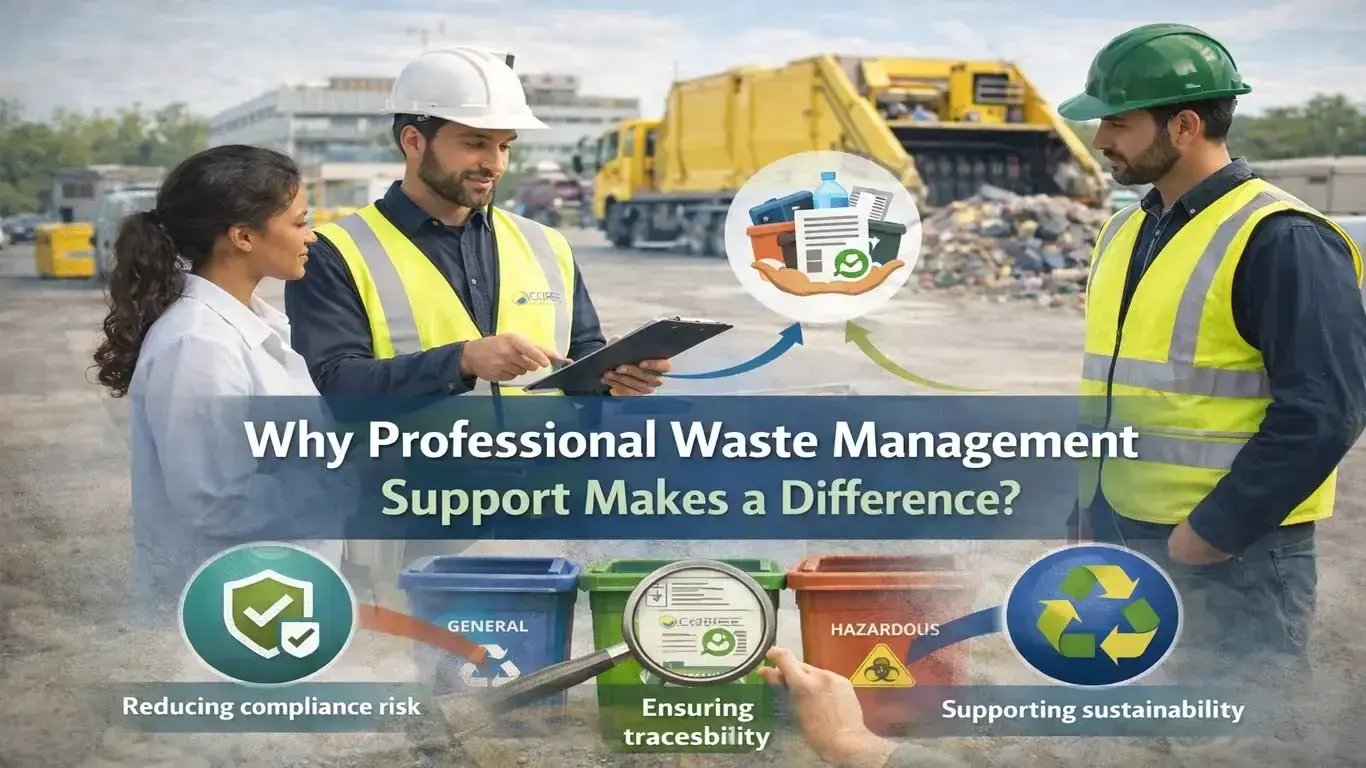
Professional waste management support adds structure, expertise, and confidence to an organisation’s operations. Even when a business is not a waste management company, a trusted partner can help meet legal duties, manage hazardous waste safely, and guarantee compliance with environmental regulations. This support improves performance, strengthens systems, and helps organisations prepare for audits effectively. Working with experts also reassures inspectors that responsibilities are clearly assigned and managed responsibly.
A professional waste management partner helps identify risks early and highlights potential gaps in compliance systems. They support organisations in addressing non-compliance issues proactively, reducing the number of audit findings during inspections. Fewer findings lead to smoother, less stressful audits and reduce the risk of penalties or corrective actions. Expert guidance ensures that waste handling procedures, documentation, and reporting align with regulations, improving overall environmental performance and demonstrating responsible management.
Waste management partners provide reliable tracking and record-keeping systems that ensure all waste follows legal disposal routes. Inspectors expect clear traceability from generation to final disposal, including hazardous and chemical waste. Partners help maintain accurate records and certificates, supporting transparency and accountability. Proper traceability reduces liability for the organisation and ensures that waste is handled responsibly at every stage. It also demonstrates active oversight and commitment to compliance and environmental protection.
Professional partners help organisations achieve sustainability and ESG (Environmental, Social, and Governance) objectives. They support lessening waste, improving recycling rates, and limiting pollution. Strong waste systems show environmental responsibility, which aligns with corporate ESG goals. Effective sustainability practices can improve public image, stakeholder confidence, and overall business value. Working with a partner ensures that sustainability initiatives are practical, legally compliant, and consistently applied across all operations.
Good waste management protocols reduce inefficiency and prevent costly errors. Partners help optimise processes, ensuring proper segregation, handling, and disposal of waste. This leads to long-term cost savings and improved resource management. Reliable compliance reduces the risk of fines and operational disruption. Over time, consistent oversight and structured systems support stable operations, stronger environmental performance, and a sustainable approach to waste management that benefits both the organisation and the community.
Most South African organisations should conduct internal waste compliance audits at least once a year. Businesses with high-risk activities, such as handling hazardous substances, may need more frequent checks. Internal audits help evaluate waste systems, staff practices, and the performance of waste management partners. They identify gaps before official inspections and provide an opportunity to address inefficiencies. Regular audits support environmental protocols, reduce surprises during inspections, and help ensure safe, responsible waste management across the organisation.
Yes, poor waste management can directly affect a company’s environmental licences or permits. Inspectors may suspend, limit, or revoke environmental rights if serious issues are identified. This includes problems linked to pollution, air emissions, hazardous waste, or unsafe storage. Using a waste management partner does not remove the organisation’s responsibility. Regulators expect oversight, monitoring, and control. Strong systems and proper management protect licences, reduce risk, and demonstrate the organisation’s commitment to environmental rules and overall population health.
A waste compliance audit focuses specifically on waste-related activities, including storage, handling, transport, and disposal procedures. An environmental audit is broader and considers overall environmental performance, such as air quality, emissions, noise, water, and other impacts. Waste audits provide more detailed insights into one area, while environmental audits assess the organisation’s entire environmental footprint. Both types of audits support legal compliance, help identify improvement opportunities, and ensure that organisations minimise environmental risks responsibly.
Waste disposal records in South Africa should generally be kept for at least five years, though some licences or permits may require longer retention. Inspectors use these records to trace waste history, verify compliance, and confirm that waste was legally managed and disposed of. Keeping records secure and organised supports transparency, accountability, and consistent regulatory compliance. Well-maintained records also demonstrate due diligence to inspectors and help protect the organisation from potential fines or enforcement action.
No, small and medium-sized organisations are not exempt from waste compliance inspections. All businesses, regardless of size, must comply with South African waste laws and regulations. Inspectors can audit any site, and legal obligations remain the same. Preparation and support from a waste management partner help organisations of all sizes maintain compliance. Even smaller businesses benefit from internal audits, staff training, and clear procedures to ensure waste is managed safely and responsibly, reducing both risk and liability.

