
How Does Food Composting Help the Environment? From Food Waste to Zero Waste to Landfill
Food composting keeps suitable organic waste out of disposal sites. This also gives the leftovers you are left with another use. They can be returned to the soil. For South African homes this matters because discarded food takes valuable nutrients and organic matter with it.
Food composting matters for businesses too. Properly managed food waste composting avoids that disposal route. So less food goes into the general rubbish container. Soil condition can improve. But businesses need dependable arrangements. That means separate containers, regular collections and suitable processing. Otherwise, the separated food may still end up buried.
What Is Food Composting?
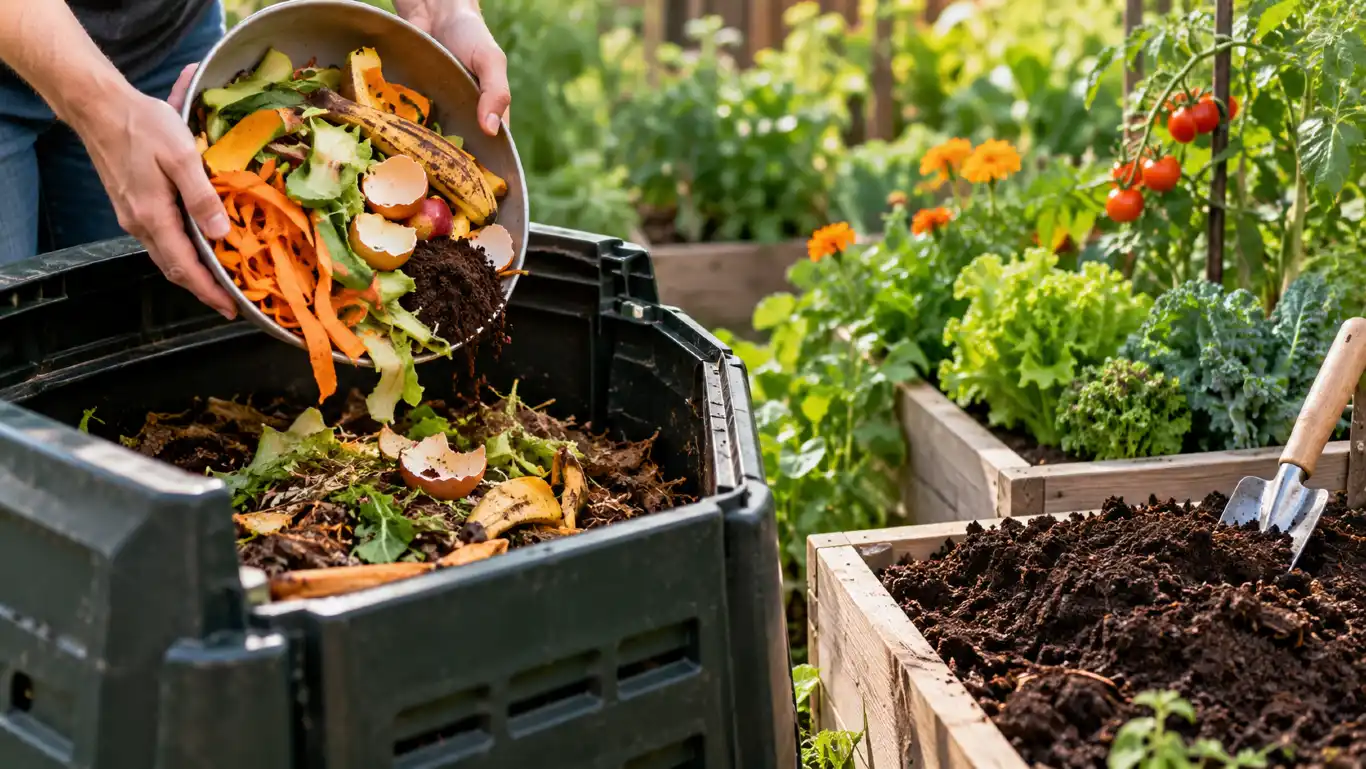
Simply put, food composting lets separated food break down. Microorganisms break down the organic material under controlled conditions. Each microorganism, also known as microbe, needs suitable moisture to thrive in and this is the perfect environment for them. A compost bin is the perfect place for this to happen.
Commercial equipment handles larger quantities. But the ingredients matter. You mix brown and green materials because straw adds carbon, while wet food brings nitrogen. Their carbon to nitrogen ratio affects the process. So do temperature and aeration. These influence the rate of decomposition. Optimum conditions depend on your inputs. A twig usually needs longer than peelings.
Why Is Food Waste Going to Landfill a Problem?
Once food enters mixed rubbish, recovery becomes difficult. Wrappers go with it. So do other contaminants. Together, they use valuable disposal space. Then the buried food starts breaking down. Because little oxygen reaches it, these anaerobic conditions can produce methane, which contributes to climate change.
South African guidance flags this concern. Meanwhile, nutrients are discarded. Useful organic matter is lost too. Neither returns to soil through planned recovery. And the waste keeps arriving. Collection services must handle it. Disposal sites need more capacity. Municipalities must plan for those growing volumes.

How Does Food Composting Help the Environment?
Reduces the Amount of Waste Sent to Landfill
Put accepted food residues in their own container. Less then goes into general rubbish. That is how waste diversion begins. Your grounds may offer another opportunity. Green waste can include grass clippings. Dead leaves may be accepted too. But check first. Some processors need different collections or handling arrangements, so ask before mixing kitchen and grounds residues together. Keep records of rejected loads. Those quantities belong outside your diversion total.
Helps Reduce Methane From Food Waste in Landfill
Buried food can break down without enough oxygen. That can produce methane. Composting takes suitable residues along a different route. Operators aerate the material so oxygen can reach it, while controlling moisture to avoid wet, airless pockets. Otherwise, methane can still form. So composting is not emission-free. Transport has impacts too. Your business should check the actual treatment arrangements. A separate collection only helps if the material reaches well-managed processing.
Turns Food Waste Into a Useful Resource
The peelings have been thrown away. You may say that their nutrients have not become worthless. By composting we literally recover some of the value they provide. But, the material needs time. First is the treatment. Then maturation. When the compost becomes ready for use, you can add it to beds. You can also use suitable grades as mulch. When this is done, it has another purpose. Ask about quality checks. Immature compost can damage plants. So collecting residues is only the beginning of recovery.
Returns Organic Matter and Nutrients to the Soil
Finished compost is a soil amendment. It returns organic matter to soil. That supports soil health. This happens because soil structure can improve, with stable clumps leaving spaces where plant roots can grow. Nutrients return too. Their amounts vary with the garden waste and food used. So check soil condition before you apply it. Compost can complement fertiliser. You may still need it. Use compost around perennial plants and beds.
Can Help Soil Retain Water
Add compost. Your soil may hold moisture longer. Organic matter acts like a sponge because it retains some water that would otherwise drain away. That can keep soil moist. For how long? It varies. Soil texture matters. So does the compost. And how much you apply. In South African gardens, watering may become less frequent. Keep checking between watering rounds. Compost helps, but your plants will still need enough water.
Supports a More Circular Approach to Waste
A meal ends. Useful resources remain. Recover suitable organic material through composting, then return it to soil to support another growing cycle. Other discarded materials can contribute too. Dry leaves, for example. They supply carbon. So do other accepted brown materials. Untreated sawdust and wood chips may be suitable too. Ask your processor first. Decide where the finished compost will go. Your grounds may need it. A local grower might.
What Food Waste Can Be Composted?
It’s important to know what can and what can’t be composted. Some of the most common things are the fruit peelings. So are vegetable waste and coffee grounds. Tea leaves and tea bags may be suitable but you must check the bags so there isn’t something plastic inside them. If you’re not sure, it’s wise to ask before you add anything unfamiliar. Household systems have their own limits.
A worm bin can work indoors. It may also suit a shady balcony. But its feeding requirements still matter. Grounds residues need checking too. Weed seeds and diseased plants require particular care. Acceptance depends on the method being used.
Preventing Food Waste Comes Before Composting
Once the meal is prepared, it doesn’t matter if it was eaten or it stayed intact. When food is in the kitchen and ready to be prepared, it’s already a potential waste. This is the reason why we say prevention comes first. What you must do is check over-ordering. Then, look at preparation losses and spoiled stock. Ensure portion sizes are right and find out if there are storage problems. When this is done, go on to compare production forecasts with actual demand.
Some of these losses are avoidable. They need changes in the kitchen. Unavoidable food scraps need a different response. Inedible peelings, for example, still need proper handling. Keep separate records for both categories. Otherwise, bigger compost collections may hide the same wasteful habits. You want fewer avoidable losses, alongside better recovery.
How Does Composting Support Zero Waste to Landfill?
Composting deals with one part of your waste. The rest still needs attention. Packaging does not disappear. Nor does damaged equipment. So waste management must cover the whole operation, including prevention, practical reuse, recycling and proper handling of whatever remains. Then check the destinations.
A collection receipt shows that material left your premises. It does not prove recovery. Ask what was accepted. Record rejected loads too. You also need quantities for general rubbish. Together, those records show how far your business has progressed. They also show where disposal still continues.
How Can Businesses Keep More Food Waste Out of Landfill?
The breakfast and the afternoon time does not produce the same waste. That’s why you must follow different patterns for these two separate periods of the day. Restaurants, hotels, commercial kitchens or retirement facilities can’t use the same scheme when it comes to waste and composting.
They all need arrangements that suit their actual daily volumes. Depending on their available space and staff, they will make separate and individual arrangements. Start with the containers. Who empties them? Where does the material wait? Heat can make odour control harder. Collection timing therefore matters.
Local services differ across South Africa too. Before you start composting, ask what the processor accepts. Then check storage space and staff responsibilities. Compare composting solutions against that daily routine. Show staff the full route from bin to collection.
Identify Where Food Waste Is Being Generated
Find the source before choosing collection capacity. Start with preparation waste. Then check spoiled stock and plate returns. Weigh kitchen scraps across normal and busy shifts. That reveals changes a single day’s total may miss. Grounds can add seasonal volumes because garden waste includes fallen leaves and material produced during hedge trimming. Record those separately. Then compare the figures with meals served or occupancy. Use that evidence when arranging collections.
Separate Food Waste at the Source
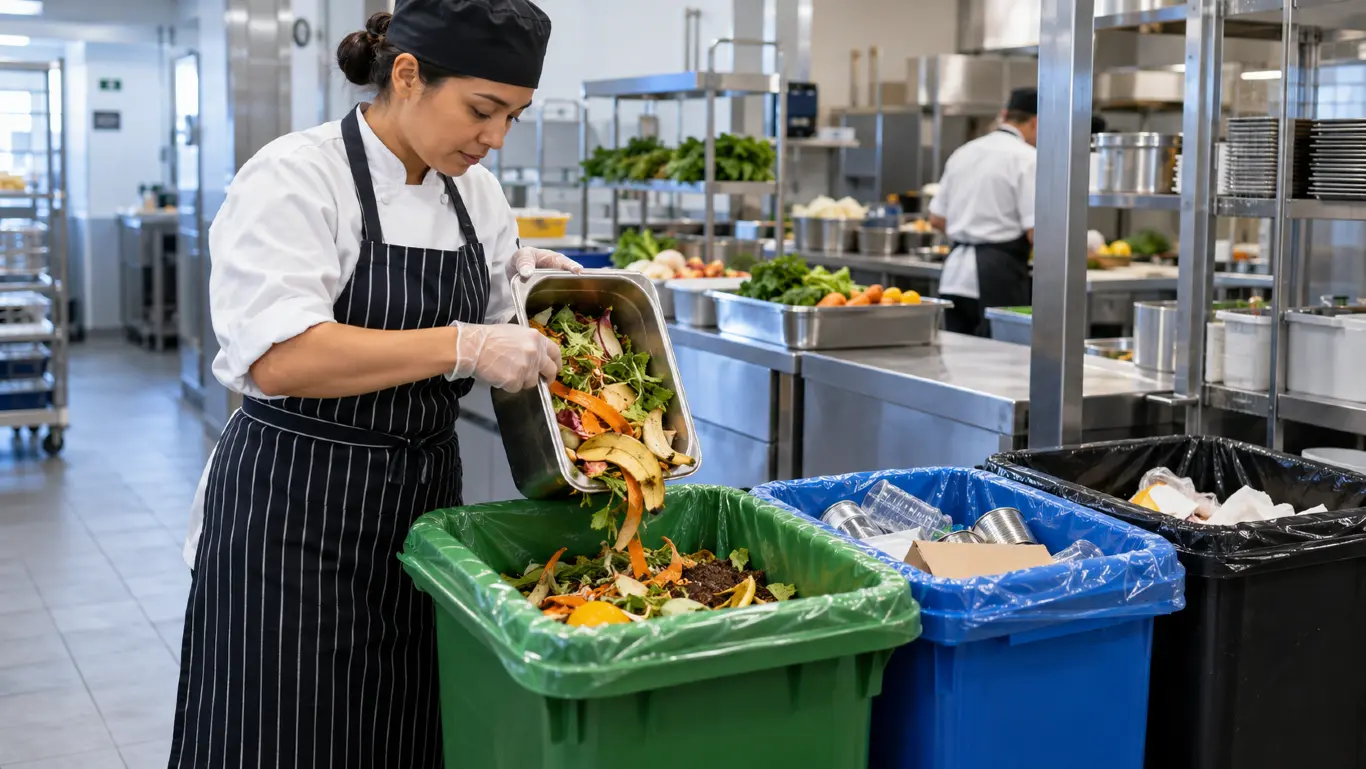
Put containers where the waste arises. Beside preparation benches, for example. Label them clearly. Keep lids secure. That matters because exposed food can attract a rat or another hungry pests between collections. Pest checks still matter too. Give staff somewhere nearby for wrappers. Otherwise, packaging may enter the food container. Choose sizes that suit each shift. Then agree who empties them. The separated contents must reach the correct storage area.
Prevent Contamination
A wrapper is easy to overlook. So is a small label. Those pieces mix through the food. Removing them then becomes harder. Plastic can spoil compost quality. Even cardboard needs checking because coatings may make a container unsuitable for the processor receiving your waste. Keep packaging containers close by, beside preparation benches. Inspect the contents before collection. Repeated mistakes need correcting. Do this while the material is still on site.
Choose the Right Waste Treatment Route
Different ways to compost suit different waste streams. Worm composting uses selected earthworm species. They produce vermicompost. But they need controlled feeding and suitable conditions. Match your quantities, waste type, collection schedule and available space to the input requirements of local processing facilities. Check other routes too. Industrial processing may suit different mixtures. Some residues may suit digestion with biogas recovery. Ask about local services. Confirm requirements before buying equipment.
Consider On-Site or Off-Site Composting
You can use an off-site processor. Food then leaves in a separate collection. Your premises need no outdoor pile. That may suit a crowded kitchen. But storage still needs planning. Before committing to on-site treatment, check drainage, staff availability and local regulations, along with processing and access space. Processing can need much space. Maturation can occupy room for weeks. Ask who will run it. Someone must maintain it between collections.
Train Staff
Show staff what each container accepts. Let them practise. Who empties it? Make that clear too. Include temporary workers in the training. For on-site processing, explain when to chop or shred inputs and check a smelly heap for excess moisture. Using worms? Bury food beneath a layer of bedding. Approved shredded paper may be suitable. Assign responsibility for checks and cleaning. Explain how staff should report problems as they arise.
Measure Food Waste and Landfill Diversion
First, get the scales out. Weigh your kitchen waste. Record the quantities sent for processing. Ask commercial composters how much they accepted. Get their rejection figures too. Keep reporting periods consistent. More meals can mean more waste, so compare quantities with meals served or occupancy before judging progress. Track waste per meal. Check your general rubbish too. Let those figures guide purchasing and collections. Back every sustainability claim with evidence.
FAQs
Is food composting better than sending food waste to landfill?
Yes, for suitable unavoidable leftovers. Composting keeps them out of mixed disposal. It also recovers material for soil. That matters because buried food can generate methane under oxygen-poor conditions, while managed aerobic treatment avoids that disposal pathway. But the process must work properly. Clean inputs are essential. So is effective operation. Preventing edible food waste still comes first. Producing that uneaten meal still used resources.
What happens if food waste is contaminated with packaging?
Contamination can make food waste harder or unsuitable to process. Plastic wrappers, cutlery, glass and other non-compostable materials should be kept out of food-waste containers unless the receiving facility specifically accepts them. Clear bin labels, staff training and regular checks can help reduce contamination and improve the amount of material that is successfully processed.
How can businesses measure food waste diverted from landfill?
Track how much food waste is collected separately and confirm what happens to it after collection. Use weights, collection records or contractor reports where available. Do not count rejected or contaminated loads as successfully diverted. Measuring the final destination gives a more accurate picture than simply counting how many food-waste bins leave the premises.

- How Does Food Composting Help the Environment? From Food Waste to Zero Waste to Landfill - October 29, 2026
- Preparing Hotels and Guest Houses for the Holiday Season - October 20, 2026
- The Importance of Effective Waste Management in Retirement Homes and Villages - September 24, 2026
